Blog

  • Bloomberg: Juul Revenues Down Sharply

    Bloomberg: Juul Revenues Down Sharply

    Juul Labs Inc. had its first quarter revenues plummet 23% from the prior year, according to people with knowledge of the matter, according Bloomberg.

    The company received $259 million of revenue for the quarter ended March 31, said the sources, who say they saw the company’s results as it seeks financing alternatives.

    “As we continue to operate in the market and go through the FDA’s review process, we are in the early stages of exploring a variety of options including various potential financing alternatives to protect our business and to address the impact of the FDA’s now stayed order so we can continue offering our products to adult consumers who have or are looking to transition away from traditional cigarettes,” a spokesperson for Juul said in a statement when asked for comment by Bloomberg.

    Juul Labs had a loss of $28 million in the period, compared with earnings of $29 million for the same period a year earlier, based on unadjusted results before interest, taxes, depreciation and amortization.

    In June, the FDA banned Juul products on US shelves, citing a lack of evidence demonstrating the overall safety of the company’s products, and noting Juul’s “disproportionate role in the rise in youth vaping.” Then the company won an emergency court order temporarily blocking the decision, and the agency separately stayed its order, allowing the company to keep selling products.

    As of the first quarter, Juul had $323 million of cash on hand, down from $428 million at the same point last year, according to people who asked not to be identified because results are confidential for closely held Juul, according to Bloomberg.

    Its debt totaled approximately $2.15 billion, including a $394 million term loan due in August 2023 and around $1.7 billion of 7 percent notes due 2025 that “payment-in-kind securities,” allowing the company to delay interest payments.

  • Deloitte Fined for Audit of Malawi Leaf Company

    Deloitte Fined for Audit of Malawi Leaf Company

    The Institute of Chartered Accountants in Malawi (ICAM) has fined Deloitte Malawi after finding the auditing firm guilty in cases involving its audits of Malawi Leaf Company.

    ICAM conducted investigations through the Ethics and Investigations Committee and convened disciplinary hearings through the Disciplinary Committee on cases of its members, according to Malawi24.

    In one case, ICAM says Deloitte did not give due diligence to the procedures in auditing Malawi Leaf Company (MLC) , a subsidiary of Auction Holdings Limited. Deloitte assured that AHL Group had complied with the applicable International Financial Reporting Standards.

    The company was found guilty for this and the ICAM council has imposed on Deloitte a maximum penalty of a severe reprimand and a fine of 1.5 million Kwacha.

    Between 2014 and 2016, ICAM says Deloitte did not give due diligence to the procedures in auditing and assured financial statements for the years in question that had errors and misstatements because they included fictitious sales made to Eastern Tobacco Company for $1.2 million.

    The company was found guilty for this and the council has imposed on Deloitte a maximum penalty of severe reprimand and a fine of 1.5 million Kwacha.

    However, Deloitte was found not guilty on a third charge related to overvaluing stocks in financial statements for 2014, 2015 and 2016.

  • Tobacco Auction Season Ends in Zimbabwe

    Tobacco Auction Season Ends in Zimbabwe

    Zimbabwe’s tobacco farmers are making their last deliveries as the tobacco auction season comes to a close.

    The auction season, which started in March, closed on Wednesday, with more than 180 million kg of the golden leaf having been sold at an average price of $3.04 per kg.

    However, due to the significant volumes that are still being received, the Tobacco Industry and Marketing Board (TIMB), said contract sales will continue until further notice. A mop-up sale will be conducted on August 17.

    “This season was okay, although not as good as last year,” said Tafadzwa Mugwagwa, a small-scale farmer from Rusape, a farming region southeast of Harare.

    “We experienced erratic rainfall, there was a dry spell and the rains were late. The crop was affected when we applied fertilizers but it picked again when the rains came, that’s why the crop wasn’t auctioned on time,” he told Xinhua, according to CTGN Africa.

    While most farmers had already delivered their crops to the auction floors before the end of the selling season, many farmers from Manicaland Province said they are yet to bring all their crops to the market.

    “We haven’t brought all the crops to the market, we still have tobacco crops back home because we didn’t finish harvesting on time. We were still curing tobacco in June,” said Dorothy Chigwededza, a tobacco farmer.

  • Joytech Parent Submits PMTA to FDA

    Joytech Parent Submits PMTA to FDA

    China-based JWEI has announced today that they have successfully submitted a premarket tobacco product application (PMTA) to the U.S. Food and Drug Administration for a device created with “new innovative technology” that focuses on safety, harm reduction and is designed to curb underage use.

    “JWEI has been a leader in this industry from the start and this milestone again reiterates our commitment to the industry and public health: ensuring our adult customers continued access to less harmful alternatives to traditional tobacco products, while setting a new standard preventing underage youth access.” said VP of JWEI Group Jason Yao.

    JWEI is the parent to the brands Joytech, Eleaf, Wismec and Joyevita. The company did not offer additional information on the specific device submitted for the PMTA.

    JWEI developed a set of principles to guide through every step of its new product development, led by safety and effectiveness studies in early 2019. “The design philosophy is the foundation and guide rails for designing, manufacturing, verifying, validating, and continuously improving innovative, responsible, reliable, and high-quality products,” the release states.

    The limited product debut in the UK has received overwhelming recognition from users and commercial partners after a few months’ actual use, according to JWEI

    “As one of the world-leading device manufacturers and innovators of e-cigarette and vaping products, JWEI has over 3,600 granted patents and multiple internationally recognized manufacturing and quality certifications (GMP, HACCP, ISO9001, ISO13485, EHS, and ERP),” according to a press release.

  • Vaporesso Gets Chinese Production License

    Vaporesso Gets Chinese Production License

    Vaporesso, a wholly-owned subsidiary of Smoore, has obtained a production licence from China’s State Tobacco Monopoly Administration (STMA), the country’s top regulator of tobacco products.

    The license gives Vaporesso products lawful status in the country, Hong Kong-listed Smoore said in a statement on Wednesday. The licence will be valid through July 2023, according to the South China Morning Post.

    Smoore is among the first group of companies to comply with China’s tightened rules for the e-cigarette industry, which recently became regulated as a traditional tobacco product.

    In March, STMA published final guidelines for the industry, which require that manufactures comply with certain technical standards, including permitted ingredients and additives.

    Licensed manufacturers must also trade with downstream wholesalers on a transaction platform overseen by STMA, according to the rules.

    Licensed manufacturers must also trade with downstream wholesalers on a transaction platform overseen by STMA, according to the rules.

    Less than 50 e-cigarette related companies, including retailers and manufacturers, have met the new restrictions and received licences from the authority so far, STMA’s website shows.

    There are an estimated 1,500 companies involved in the vaping industry, according to calculations by the Electronic Cigarette Professional Committee of China Electronics Chamber of Commerce (ECCC) last year.

    However, more licenses are expected to be issued in coming months as regulators work through a backlog of applications, according to news reports.

  • NJOY Rumored to be Readying for Potential Sale

    NJOY Rumored to be Readying for Potential Sale

    E-cigarette maker NJOY Holdings Inc has hired bankers for a possible sale of the company, the Wall Street Journal reported on Tuesday, citing people familiar with the matter.

    The report added the privately held NJOY is likely to be valued at up to $5 billion, according to the sources who cautioned the process was still at an early stage and there was no guarantee a deal would materialize.

    If NJOY does not receive a high enough valuation, the company could raise money and stay private, potentially paving the way for a future initial public offering, the Wall Street Journal said.

    The e-cigarette maker is simultaneously exploring a new fundraising round and aims to raise between $300 million and $500 million, the report added.

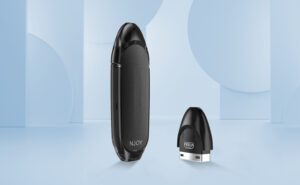
    NJOY has two devices that have received marketing approval from the U.S. Food and Drug Administration, including its Ace device and Daily disposables.

    Late June, Bernstein analyst Callum Elliott wrote in a note that Altria could try to buy privately owned NJOY, which “has already succeeded with its PMTA process applications.”

    Rival Juul Labs Inc said on Friday it was in the early stages of exploring several options, including financing alternatives, as the company deals with lawsuits and a probable ban on sales of its e-cigarettes by U.S. health regulators.

    NJOY and Mudrick Capital Management, a majority owner of the company, did not immediately respond to a Reuters request for comment.

  • FDA Reviewing Oversight Rules After Botched Juul PMTA

    FDA Reviewing Oversight Rules After Botched Juul PMTA

    The head of the U.S. Food and Drug Administration Tuesday said he has commissioned an independent review of the agency’s food and tobacco programs following months of criticism over its handling of the baby formula shortage and e-cigarette reviews, according to AP.

    The announcement comes as FDA Commissioner Robert Califf attempts to push past several controversies that have dominated his second stint running the agency, including his issuing of a marketing denial order (MDO) to e-cigarette maker Juul Labs and later having to rescind that order and placing Juul’s premarket tobacco product application (PMTA) back under review.

    “Fundamental questions about the structure, function, funding and leadership need to be addressed” in the agency’s programs, Califf said in a statement. The agency’s Center for Tobacco Products (CTP) is facing challenges navigating policy and enforcement issues from “an increasing number of novel products that could potentially have significant consequences for public health … CTP will continue its important work during the evaluation, including review pending applications and take enforcement actions as needed.”

    Califf said the non-profit Reagan-Udall Foundation — a non-governmental research group created by Congress to support FDA’s work — would convene experts to deliver evaluations within 60 business days of both the food and tobacco operations.

    “It may take some time to implement any recommended changes, but I am committed to addressing them and communicating them to the public in a timely manner,” Califf stated. “It is my belief that this effort will continue strengthening the FDA and better position the agency to deal with the many immediate public health issues we are facing, while preparing for the many scientific challenges and fascinating opportunities of the future.”

  • Court Denies Triton, Vapetasia Review of FDA Orders

    Court Denies Triton, Vapetasia Review of FDA Orders

    Two makers of flavored e-liquids lost their bid to force the U.S. Food and Drug Administration to allow them to market their vaping products, after the U.S. Court of Appeals for the Fifth Circuit denied their requests Monday for review of the agency’s orders.

    Wages and White Lion Investments LLC, doing business as Triton Distribution, and Vapetasia LLC didn’t show that the FDA acted arbitrarily or capriciously when it rejected their premarket tobacco product applications (PMTAs), the Fifth Circuit said.

    If the ruling holds, Triton and Vapetasia will not be able to sell their reduced-risk nicotine products.

    Dozens of other smaller vape companies have accused the agency of operating unfairly, and will likely be disheartened by this ruling, reports Alex Norcia for Filter.

    “Among the three judges who heard the Triton case, Catharina Haynes and Gregg Costa sided with the FDA. Edith Jones, the former chief judge of the Fifth Circuit who has served since the Reagan administration, dissented from her colleagues,” Norcia writes.

    Todd Wages, a partner at Triton Distribution, told Filter he was “very disappointed” in the court. “We’re exploring our next steps. I will not stop fighting until I can’t any longer, until every door is closed,” he said.

    The FDA rejected applications to market 55,000 flavored e-cigarettes in August, 2021, including Triton’s, and said applicants would likely need to conduct long-term studies establishing their products’ benefits to win approval.

    A Fifth Circuit panel then in October agreed with Triton’s claim that the new requirement for long-term studies differed from earlier FDA guidance and was a “surprise switcheroo” and the panel allowed Triton to keep selling its e-cigarettes until another panel could hear its appeal.

    Eric Heyer, the lawyer representing Triton Distribution, told Filter that the company “intends to file a petition for rehearing en banc by the entirety of the Fifth Circuit.”

  • USTC Exits Bankruptcy

    USTC Exits Bankruptcy

    Photo: USTC

    U.S. Tobacco Cooperative (USTC) exited bankruptcy on July 14. The announcement follows the federal Bankruptcy Court’s approval of the cooperative’s Chapter 11 plan of reorganization on June 23, 2022, along with approval of the settlement terms with the Lewis Class.

    USTC filed for bankruptcy protection in July 2021 in order to meet contractual obligations to its member growers while the company addressed uncertainty presented by the ongoing Lewis class action lawsuit.

    “Today’s exit from bankruptcy marks the end of more than 17 years of class action lawsuits following the termination of the federal price support program that ran from 1946 to 2005,” said USTC CEO Oscar J. House in a statement.

    “Our exit allows us to now focus solely on the services and products our cooperative is known for. I want to thank our customers, employees, suppliers, board of directors and especially our member growers for their continual support throughout the bankruptcy proceedings, which are now officially behind us.”

    In accordance with the plan, the cooperative pays in full its secured lenders, suppliers and unsecured creditors in addition to settlement amounts to the Lewis Class.

    “We are energized,” continued House. “Our business is robust with our farmer members contracting for this fall’s harvest, customers ordering our products and shipments processing daily. With our experienced management team, dedicated employees and our strong market position, the cooperative is poised for a successful future.”

  • Romania to Hike ‘Sin Taxes’

    Romania to Hike ‘Sin Taxes’

    Photo: Maksym Kapliuk

    Romania’s government will increase tobacco and alcohol excise duties as of Aug. 1, aiming to boost public revenue, reports SeeNews. The measure will be followed by a 10 percent tax hike on sugary drinks effective Jan. 1, 2023

    The excise duty on tobacco and alcohol has been unchanged since 2015.

    The European Union requires member states to impose an excise duty of at least 60 percent of the weighted average retail selling price of cigarettes. 

    The Romanian government expects the measures to boost budget revenues by RON1.2 billion ($242 million) this year and RON10.57 billion in 2023.