E-Liquid manufacturer Zinwi Bio-Tech is set to unveil its new logo at the Total Products Expo (TPE) in Las Vegas from Feb. 22 – 24. The company will also be highlighting 15 of its most popular e-liquid flavors for TPE attendees to experience.
Zinwi, a global integrated e-liquid solutions provider, upgraded its branding in December to better reflect the company’s dedication to providing high-quality products and the brand’s entry into a new development phase.
“In this new phase, Zinwi will place more emphasis on product research and development, and provide diversified products to meet the needs of global markets,” a Zinwi spokesperson told Tobacco Reporter. “Zinwi is committed to continuing to explore e-liquid technology, pursue innovation and provide cutting-edge integrated e-liquid solutions.”
Zinwi’s new logo resembles a drop of e-liquid oil, which alludes to the company’s unwavering commitment to product research and development. The Zinwi “Z” and oil design are integrated to symbolize the company’s dedication to continuous product research and development, according to a press release. The light blue color of the logo features Zinwi’s laboratories that conduct its scientific product research and development in the background.
Currently, new nicotine salt and glycerol alternatives are two major topics of research for Zinwi. The company’s product research and development team has produced a new nicotine salt that has distinct advantages compared with the traditional benzoic acid nicotine salt.
“This new innovation brings with it a significant reduction in the number of impurities released. Zinwi is also in the process of researching and developing glycerol alternatives,” the spokesperson said. “The research and development of glycerol alternatives is an effort to reduce the toxins released during atomization and to allow the products to be more environmentally friendly.”
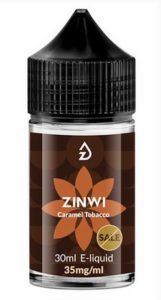
The 15 e-liquid products Zinwi is set to showcase at TPE include five tobacco flavors and 10 non-tobacco flavors. They are Zinwi’s best-selling flavors and have been widely recognized by the company’s global client base. One of the flavors, Caramel Tobacco, has a distinctive caramel flavor along with a mild tobacco accent.
In order to allow the show attendees to experience the different flavors, Zinwi will provide disposable vaping devices pre-filled with the Zinwi e-liquids in the 15 flavor profiles. “Trade show attendees will be able to try out the different flavors in different devices with a variety of settings, enabling them to reach the optimal puff experience,” the spokesperson said.
Cambodia’s Consumer Protection and Fraud Repression General Department of Ministry of Commerce, in cooperation with the National Authority for Combating Drugs, burned 288 boxes of UOLO e-cigarettes, equivalent to 7,200 packs, at a landfill in Phnom Penh’s Dangkor district, reports the Khmer Times.
Heng Maly, director of the Consumer Protection and Fraud Repression General Department, said, “The e-cigarettes were confiscated on Nov. 3, 2022, from a warehouse, pursuant to the order to seize and destroy by the prosecutor of the Phnom Penh Municipal Court.”
The e-cigarettes were discovered after an investigation by the General Department of CCF, which confiscated 3,600 packs of UOLO e-cigarettes, 1,800 e-cigarette machines and 1,800 e-cigarette mouthpieces.
With Republicans in control of the U.S. House, some experts expect the vape industry to thrive.
By Timothy S. Donahue
The next two years should be better than the past two years. That was the overall outlook from vapor industry experts speaking during the Vapor Technology Association’s (VTA) 2022 Post-Election Round-Up webinar in late November. Tony Abboud, executive director of the VTA, told attendees that his organization has been working diligently with two Washington, D.C.-based firms, West Front Strategies, a lobbying group, and FORA Partners, a public affairs agency, to promote the interests of the vaping industry as Republicans take over the U.S. House of Representatives in 2023. “We have a very specific agenda, some of which we’ve discussed (as an overview of what) we are pursuing,” he said. “We’ve done an enormous amount of groundwork.”
Shimmy Stein
Shimmy Stein, a partner with West Front Strategies, said the change in leadership at the House could have a positive impact on the vaping industry until at least the next election cycle. “Anytime you can take over the gavels, take over the control of the messaging, take over control of the chairmanships and the legislation, that is an important piece of governing,” he explained. “And so, while it was not to the extent or to the size which Republicans were hoping for in terms of the majority in the House of Representatives, it’s still pretty significant and will change the manner in which Washington will function.”
Over the next two years, the vaping industry should feel “a little more comfortable, a little more secure” going into a divided Congress (the U.S. Senate leadership did not change), according to Craig Kalkut, a partner with West Front Strategies. However, the vaping industry has always faced threats from both Democrats and Republicans due to their concerns over teen vaping. “We still need to work with both parties. We still could face issues and threats of overregulation and poorly conceived legislation. But the bottom line is that we will have a more comfortable environment with Republicans controlling one house of Congress,” said Kalkut.
Craig Kalkut
Reconciliation, a way for Congress to enact legislation on taxes, spending and the debt limit with only a majority vote, is no longer a threat to the vapor industry, according to Kalkut. He said that’s just not something that can happen in a divided Congress. “What that means, ultimately, is that anything that passes will need to have bipartisan support,” said Kalkut. “And because of that, [legislation] will likely be more limited, more moderate, and hopefully, if there’s any legislation passed in our area, that will be something that allows us to thrive, which addresses the concerns that linger over teen vaping but does not overregulate and drive people away from vaping.”
Kalkut also confirmed that gridlock is a concern in a divided Congress; however, gridlock could also provide incentives for both parties to compromise. “They’re both seen as in charge, so they both sometimes want to get something done. And that will bring people to the table and often over issues that are not central to either party’s ideology,” he said. “It’s hard to come to a compromise on taxes, or it’s hard to come to a compromise on healthcare … but something like vaping, perhaps there will be opportunity for common sense provisions to prevail in an area where Democrats and Republicans can come together.”
Max Hamel
Max Hamel, founding partner of FORA, said when Congress is split, the White House typically relies heavily on its executive privilege. There is no known administration agenda on vaping, so a vaping-related rule is unlikely. With Republicans in control of the House, they also head committees. The House oversight committee and its subcommittees could present opportunity for the vaping industry, according to Hamel.
“We do have new personalities on both the majority and the minority side, so they’ll probably have some growing pains,” he said. “The big question is, how does this new authority, especially in the House, get wielded[?] … whether it’s one seat or 40 seats, the authority with the majority is the same, and it is substantial from [an] investigation and oversight standpoint; [that’s] probably not necessarily true from a legislative standpoint … the oversight subcommittee, we do have the opportunity to surface some things, but it’s really an opportunity for us now to not be on defense and [to] put forth an agenda and some messaging that really focuses on the things that are advantageous to us.”
Additionally, with Juul losing its stranglehold on the vaping market, Hamel said the vaping landscape is changing. Juul became the focus to save youth from vaping, and today, Juul isn’t the focus. The market is made up of a more diverse group of companies with different technologies dedicated to harm reduction. Hamel said this is the message that should be projected. “I think our priority will be focusing on the messages that really emphasize the harm reduction aspects,” he said.
Kalkut then added that the vaping industry has an opportunity now to change the conversation, particularly with Democrats but also Republican critics and skeptics of vaping through the ever-expanding body of science that shows the relative safety and incredible potential for harm reduction that next-generation tobacco products have. “That has become more and more clear as time has gone on over the last couple of years,” he said. “I think once we show that, once we demonstrate our commitment as an association in the industry to addressing teen vaping, we have a real chance of changing the narrative.”
Ashley Davis
Ashley Davis, a founding partner at West Front Strategies, told attendees that, looking back on industry challenges, there has been success. However, her concerns going into the last Congress (2020–2022) were that she didn’t really know in what direction or how forcefully Biden would lean on the vapor industry. She says the industry “dodged a bullet.” The industry could have suffered more than it did those first two years in a Biden administration. She also said the issue of youth use will remain at the forefront of any discussion concerning electronic nicotine-delivery system products.
“We do have to still deal with the youth issue. And I think we all realize that any negative press that comes up is around the youth issue … Everyone loves a microphone. It’s a member of Congress. If there’s an issue to discuss, that’s what they’re going to discuss,” explained Davis. “[We are] trying to make sure that any bad legislation is not passed—it’s much more unlikely in this Congress than it was before.”
Taking a question from the audience, Abboud closed the session speculating on the impact of the Reagan-Udall Foundation’s external review of the U.S. Food and Drug Administration’s Center for Tobacco Products, the results of which are expected in mid-December.
Abboud said that numerous comments from staffers of the FDA for the Reagan-Udall assessment suggest the regulatory agency is in a state of disarray and is being influenced by outside forces not scientific research. He said he hopes the foundation will advise the FDA that premarket tobacco product application (PMTA) decisions should be free from any external pressures, especially political pressure.
“[The review should recommend to the FDA that PMTA] decisions must be made based upon the science that is submitted as well as making sure that the agency does, in fact, review all of the science that has been submitted as part of any applications as well as [reviewing] all of the applications that have [been] submitted,” said Abboud. “Because that was another big failing of the current process where applications have been rejected [without a full review].”
A lawmaker in Scotland wants to ban the public display of e-cigarettes in retail shops. Scottish Greens MSP Gillian Mackay wants retailers to treat them in the same way as cigarettes and hide them from view.
“This is beyond the days of smoking behind the bike sheds—this is a multi-million industry leading the nation’s health down a path to disaster,” Mackay said. “It is a ticking time bomb, and, until we know more, that’s not a risk I or anyone else should be asked to accept.”
She has written to shops and vape manufacturers ahead of taking her campaign to the Scottish Parliament, according to the Daily Record.
Mackay, the Green Party’s health spokesman, said there is growing concern that the number of underage people being attracted by “deliberately sweet-toothed tactics” to market products is spiraling.
She is calling on retailers to lead by example by writing to them urging that they hide the products from view.
The Reagan-Udall Foundation today submitted its recommendations to Robert Califf , commissioner of the U.S. Food and Drug Administration. The findings are what many in the industry are calling “meaningless” and “less than compelling.”
The report concludes that vaping industry stakeholders observed a lack of “consistent implementation” of what the industry understood to be the policies of the Center for Tobacco Products (CTP), particularly with respect to tobacco harm reduction and the requirements needed to navigate the premarket tobacco product application (PMTA) process.
The “Operational Evaluation of FDA’s Tobacco Program” was facilitated at Califf’s request. The announcement came as Califf attempted to push past several controversies that dominated his second stint running the agency, including his issuing of a marketing denial order (MDO) to e-cigarette maker Juul Labs and later having to rescind that order.
The report did highlight several wide-ranging problems that the report states hinder its ability to regulate the industry and reduce tobacco-related disease and death. The report stated that the CTP should make “process improvements and identify and address the policy and scientific questions” that underpin its regulatory framework. The review concluded that CTP’s implementation of its program also has been affected by “changes in leadership and administrations.” In its first 13 years, CTP has operated under seven different commissioners in three different administrations, and recently hired a third CTP director, Brian King.
“From the stakeholders’ perspective, policy shifts with broad impact on the industry occurred without notice. The Center has faced significant challenges in clearing its policies through the career and political infrastructure. It took years to establish requirements and standards governing application reviews, frustrating industry and creating problems for the Center itself when it received deficient applications,” the report states. “Issues in application reviews resulted in litigation necessitating re-review of some applications. The current environment reflects an unintended shift from what was structured by law as a pre-market authorization framework to the reality of a post-market regulatory environment, which is much more difficult to deal with given that there are few incentives for industry to come into compliance and many incentives for industry to delay the process.”
The evaluation and resulting recommendations focused on four program areas: regulations and guidance, application review, compliance and enforcement, and communication with the public and other stakeholders, according to the review. The review and recommendations are meant to assist the agency in making changes to better carry out its regulatory responsibilities; to strengthen its relationships with stakeholders
The report identified several fundamental issues that the center needs to address and it states that the report offers “cross-cutting as well as program-specific recommendations to help CTP operate more effectively,” according to the authors of the review.
The key points from the report can be summarized as follows:
The panel observes that CTP has been forced to operate primarily in a reactive mode, moving from one challenge to the next, mainly provoked by the outside forces. The Center should transition to becoming a more proactive and strategic program. With more substantial engagement with stakeholders and the public, CTP should take the time now to think strategically about where it is today and where it needs to go in the next several years.
Although CTP has a critical mission to protect the public health from tobacco-related disease and death and is regulating products that have no inherent benefit and huge societal costs, it is a government regulatory program with a duty to run efficiently, fairly, and transparently. This responsibility to function as an effective product regulator should be captured in the Center’s mission, vision, and goals and carried out to the best of the Center’s ability.
The panel recognizes that to improve the effectiveness of its application review, the Center should make process improvements and identify and address the policy and scientific questions that underpin its regulatory framework.
CTP needs to work with other entities on strategies to clear the market of illegal tobacco products more rapidly and provide more transparency to the public on its efforts to do so. This work is challenging but essential as CTP adopts a more strategic approach. While there is much the Center can do on its own, the panel notes that enforcement of the premarket requirements in the tobacco laws, particularly to help prevent youth use of tobacco products, requires the involvement and support of agencies other than FDA. The authors encourage the agency to elevate this issue and pursue a more comprehensive approach that leverages the resources of other agencies with a declared role in tobacco control.
“Overall, the panel is confident that many of the concerns raised in this report can be addressed by CTP’s talented and dedicated staff, with the support of FDA leadership,” the report states.
Numerous comments from purported staffers of the FDA for the Reagan Udall assessment claimed the regulatory agency is in a state of disarray and being influenced by outside forces, not scientific research. One comment stated that reviewers of premarket tobacco product applications (PMTAs) in the CTP Office of Science (OS) lack the autonomy to exercise “best scientific practices” in their reviews of PMTAs. The report fails to address these issues.
The panel was comprised of former federal public health leaders, regulatory strategists, and process improvement specialists. Lauren Silvis, served as chair of the group, which included Jane Axelrad, Keith Flanagan, Charlene Frizzera, and Alberto Gutierrez.
“The panel provided recommendations to help the Agency’s tobacco program strengthen its operations as it works to reduce the harm associated with tobacco use,” said Lauren Silvis. “The Center for Tobacco Products has made significant progress in establishing a regulatory program for tobacco products and our recommendations are intended to help the Center develop additional tools for achieving its public health objectives.”
Through multiple listening sessions, interviews, and an online portal, the group received and carefully reviewed input from a range of stakeholders, including FDA staff and the public, according to the report. The author’s claim the report offers “cross-cutting and program-specific recommendations” for the FDA to consider, “focusing on regulations and guidance, application review, compliance and enforcement, and communication with the public and other stakeholders.”
The report did not address tobacco policy issues, which are outside the scope of the evaluation, according to a Reagan-Udall Foundation.
One industry stakeholder, who asked not to be named for fear of retribution from the FDA for its brands under PMTA review by the agency, said the report’s findings were “a joke” and “completely ignorant of the real problems at the CTP.”
Califf said Monday he will review the recommendations with the aim of outlining the agency’s next steps by February.
Earlier this month, Reagan-Udall delivered its food report that was commissioned at the same time as the tobacco report. The food response suggests the agency’s leadership be restructured to improve its response to emergencies, including the recent shortage of baby formula
Reagan-Udall was created by Congress to help further FDA’s mission. The non-profit receives funding from both the FDA and the industries it regulates, including drugmakers.
The idea that e-cigarette flavors hook kids is simple, compelling—and false.
By Clive Bates
In a fact sheet titled “Flavored E-cigarettes Hook Kids,” the U.S.-based Campaign for Tobacco-Free Kids asserts that “Flavored e-cigarettes are undermining the nation’s overall efforts to reduce youth tobacco use and putting a new generation of kids at risk of nicotine addiction and the serious health harms that result from tobacco use.” Let us call this “the activist proposition.”
The challenge with simple but false activist propositions is that refuting them can require a lengthy embrace of more complex arguments. Brandolini’s law, also known as the bullshit asymmetry principle, can be expressed: “The amount of energy needed to refute bullshit is an order of magnitude larger than to produce it.” In this article, we shall demonstrate Brandolini’s law by addressing the simple but false activist proposition about flavored e-cigarettes through a series of questions.
First, do flavors cause youth tobacco or nicotine use? The activist proposition builds in an assumption that flavors cause e-cigarette use. Lots of young people use flavored e-cigarettes. Therefore, it is claimed, flavored e-cigarettes must cause young people to use e-cigarettes. But how likely is that? We know from the past that a high proportion of young people can use tobacco if they choose to, mostly without flavors. According to the Monitoring the Future survey, for most of the 1990s, U.S. 12th-grade past 30-day cigarette smoking prevalence was at or above 30 percent. By 2021, teenage cigarette smoking had fallen around 4 percent, but nicotine vaping had reached 20 percent. Perhaps there is a persistent demand for nicotine or tobacco, regardless of whether it is flavored. Also, let’s look over time. In the United States, high school past 30-day vaping was 11.3 percent in 2016, rose to 27.5 percent in 2019 but fell to 14.1 percent by 2022. Yet there was very little change in the availability of flavored e-cigarettes to explain these swings. There are also countries where flavors are widely available but youth vaping is relatively low. Take the U.K., for example, which takes a positive approach to tobacco harm reduction and vaping. Thousands of flavored products are available, but according to a recent official evidence assessment, youth vaping remains below 10 percent. And the U.K. offers us a further important insight: “[D]ata showed that most young people who had never smoked were also not currently vaping (98.3 percent).” This tells us that vaping is highly concentrated in adolescents already open to tobacco use.
Second, so what does cause youth tobacco or nicotine use? Most of the evidence points to characteristics of the individual and their circumstances not tobacco product features. Tobacco use is driven by a complex mix of psychosocial factors, including genetics, parental smoking, poverty, delinquency, rebelliousness, low self-esteem, peer group, etc. A 2016 literature review identified 98 conceptually different potential predictors of smoking onset. A 2019 study looked at stated reasons for e-cigarette use and concluded there were two main drivers: “alternative to cigarettes” and the “larger social environment.” For some young people, tobacco or nicotine use may have functional benefits. It may modulate stress or anxiety, improve concentration or help control conditions such as attention deficit hyperactivity disorder(ADHD). For others, it may be just frivolous and experimental. In 2019, the U.S. Centers for Disease Control and Prevention asked young people why they vaped; the top reason was, “I was curious about them.”
Third, what would teenage vapers do if they were not vaping? Implicit in the activist proposition is the idea that removing flavors will remove the reason to vape and stop the user from vaping. At one level, there is some truth in this. If the products are bland, unpleasant or tasteless, perhaps no one will use them. But here is the problem: What if the demand for tobacco and nicotine has deeper psychosocial causes, such as those discussed above? Removing the flavored products does not make the demand go away. Would the teenage vapers just give up vaping and do more homework and piano practice instead? If the underlying demand remains, that is unlikely. Teenagers interested in nicotine might revert to cigarettes, cigars or other tobacco products. We have some evidence for this: When e-liquid flavors were banned in San Francisco in 2019, there was an increase in teenage smoking compared to other areas where flavors had not been banned. This is hardly a surprise—in one study, young adults were asked what they would do if e-cigarette flavors were banned. About one-third said they were likely to switch to cigarettes.
In 2022, Boston-based public health scientists Mike Siegel and Amanda Katchmar reviewed the body of evidence on youth smoking and vaping, concluding that it “suggests that youth e-cigarette use has instead worked to replace a culture of youth smoking.” Economic analysis also backs this idea—when prices of e-cigarettes increase, youth vaping falls, but youth smoking rises. That tells us that e-cigarettes and cigarettes function as substitutes. If regulators ban e-cigarette flavors, then they should not be surprised if more smoking is the result. For that reason, Siegel and Katchmar concluded “[W]e propose a reevaluation of current policies surrounding e-cigarette sales so that declines in e-cigarette use will not come at the cost of increasing cigarette use among youth and adults.” That is very troubling for the activist proposition—it means policies to address youth vaping cannot be evaluated without concern for their effect on youth smoking. It also means that some youth vaping may be a diversion from smoking and is beneficial. It follows that regulation discouraging vaping could easily be harmful.
Fourth, how would a ban on flavors work? The logic of the activist proposition is that a ban on flavored products would remove flavored products from the market, thus removing the reason for young people to vape. But that is not how prohibitions work in practice. A prohibition does not cause the prohibited product to disappear. But in practice, a prohibition causes the perturbation of a market. It causes changes to the behavior of consumers, legal and illegal suppliers, prices and availability. Foreseeable consequences include switching to cigarettes or other tobacco products; switching to other substances; switching e-cigarettes to the permitted flavors; illicit trade in flavored liquids; home mixing and informal selling; cross-border trade or internet sales; stockpiling and workarounds such as sales of flavors for aromatherapy. Prohibitions change the supply side, and rarely for the better. There should be no mystery about this: Despite longstanding prohibition, the Monitoring the Future survey shows that U.S. 12th-grade past 30-day cannabis use has been around 20 percent and daily use around 5 percent for about the past 25 years. Some of these responses to flavor prohibition will clearly increase harm compared to vaping. Because smoking is so much more harmful, it would only take a slight uptick in smoking to offset any benefit of significantly reduced teenage vaping. But there are also hazards arising from informal manufacturing and workarounds. Illicit supply will bring adolescents into contact with criminal networks as consumers and potentially as low-level participants.
Fifth, what is really going on with youth vaping? I believe there are two broad patterns of youth vaping and two distinct behaviors at work, but these are often conflated. The first is frivolous and experimental use, where young people try new things. This has characteristics of a frothy fad: infrequent use, transient and unpredictable. The second is more determined nicotine use: frequent, intense and entrenched. But this group is more likely to be the adolescents who would otherwise be using cigarettes or other tobacco products. The first group contributes to the “youth vaping epidemic” narrative but is not really a cause for great public health concern. The second group represents the migration of nicotine use in society to far safer technologies and is likely beneficial for public health. The activist proposition, however, requires policymakers to believe there is no latent demand for nicotine use and that removing products will eliminate nicotine from society. But it is much more plausible to think of the demand for nicotine in similar terms to alcohol, caffeine, cannabis and other recreational substances. People use nicotine for a reason, and there will be a long-term demand for it. The task for policymakers and regulators is to make that acceptably safe and to resist simplistic activist propositions that are likely to do more harm than good.
In November 2022, the Campaign For Tobacco Free Kids celebrated the success of a mass activist campaign to secure Proposition 31, a ban on flavored products in California. They may have won their political battle, and their aggressive promotion of the activist proposition has again prevailed. But nowhere in its advocacy literature does this powerful coalition level with California’s voters about the underlying drivers of youth nicotine use, the linkages between smoking and vaping, and the risks of unintended consequences. They can deny this real-world complexity, but policies built on bullshit have a nasty tendency to go wrong, to do more harm than good and to call into question the credibility of their advocates.
Clive Bates is the director of Counterfactual Consulting and the former director of Action on Smoking and Health (U.K.).
The Hong Kong government wants to resume shipment of alternative smoking products through the city to boost the air cargo industry, reports the South China Morning Post. Domestic sales would remain illegal under the proposal.
The city currently prohibits imports and transshipment of electronic nicotine-delivery devices, many of which are manufactured in neighboring Shenzhen.
“The government hopes to ensure the policy on the importation ban on alternative smoking products will be preserved while maintaining Hong Kong’s position as a leading international aviation and logistics hub,” said Pamela Lam Nga-man, deputy secretary for transport and logistics.
Hong Kong International Airport handled 5 million tons of cargo in 2021, which is about 42 percent of the city’s overseas trade worth about HKD4.34 trillion ($556 billion). Air cargo volumes fell 18 percent on average from May to October of 2022 compared with the same period last year. Some of this decline was attributed to loss of transshipment of alternative smoking products from mainland China; most of the materials were transported through Hong Kong.
Under the government’s proposal, products that arrive by sea for air shipment would use a mainland logistics park set up under a pilot transshipment scheme between the city’s airport and the mainland city of Dongguan. A scheme for secure road transport from the mainland would be set up, documents would have to accompany shipments to prevent them leaking into the black market, and products would have to be directly transferred by designated routing in Hong Kong. Goods would be delivered to restricted areas of the airport and held until flown out. Provision of advance cargo information, application of designated seal or e-lock on containers and GPS tracking of cargo would also be used.
During an exclusive interview with the Associated Press, the director of the U.S. Food and Drug Administration’s Center for Tobacco Products (CTP), Brian King, said the FDA is well on its way in setting a foundation for substantial reductions in combustible tobacco smoking with the product standards such as a menthol ban and flavor bans for e-cigarettes and cigars.
When asked about several surveys that have shown many adults think e-cigarettes are as dangerous as traditional cigarettes, King said he was fully aware of the misperceptions surrounding vaping products those misperceptions aren’t consistent with the known science.
“We do know that e-cigarettes — as a general class — have markedly less risk than a combustible cigarette product,” King said. “That said, I think it’s very critical that we inform any communication campaigns using science and evidence. It has to be very carefully thought out to ensure that we’re maximizing impact and avoiding unintended consequences.”
King also said he believes “there’s a lot of really important science and innovations” that have occurred in the vaping industry in recent years, adding that the most notable is nicotine salts in e-liquids.
“We know that when you smoke a tobacco product, it’s a very efficient way to deliver nicotine across the blood-brain barrier. So it’s been very difficult to rival that efficiency in another product,” said King. “But in the case of nicotine salts you have the potential to more efficiently deliver nicotine which could hold some public health promise in terms of giving smokers enough nicotine that they would transition completely.
“But you also have to consider the opposite side of the coin, which is the inherent risks of initiation among youth. So I do worry about that … there’s a lot happening and I think that it could be promise or peril. But I think it’s important that the science drives that.”
The U.S. Court of Appeals for the Eleventh Circuit has ruled that the U.S. Food and Drug Administration’s marketing denial orders (MDOs) for Kaival Brands’ Bidi Vapor products are arbitrary and capricious.
“The Administration refused to consider the marketing and sales access restrictions plans based on both its need for efficiency and its experience that the marketing and sales access restrictions do not sufficiently reduce youth use of electronic nicotine products,” Chief Judge William Pryor wrote. “Because ‘agency action is lawful only if it rests on a consideration of the relevant factors,’ and the Administration failed to consider the marketing and sales access restrictions plans, the marketing denial orders were arbitrary and capricious.”
In the court’s 2-1 split decision, additionally, the majority stated:
The court recognizes relevant distinctions between closed/cartridge systems (that are easy to conceal and use) and the open tank liquids sold in vape shops;
FDA’s refusal to review marketing plans was error and not harmless (disagreeing with Fifth and DC Circuits).
In the 70-page opinion, Bidi Vapor, Diamond Vapor, Johnny Copper, Vapor Unlimited, Union Street Brands and Pop Vapor, the petitioners in the case, had all appeals granted, denial orders vacated and remanded.
In her dissent, Judge Robin Stacie Rosenbaum wrote, “Spoiler alert: This opinion contains spoilers on how the U.S. Food and Drug Administration will resolve petitioner vaping product companies’ premarket tobacco product applications on remand from this appeal.”
She then stated “never mind. There’s nothing to spoil here. Anyone who knows all the relevant facts necessarily already knows how this one ends.”
She stated that the while the majority faulted the FDA for not considering the companies’ proposed restrictions on youth use, the FDA’s framework for evaluating PMTAs leaves “no room for doubt that the FDA will deny—in fact, under the Family Smoking Prevention and Tobacco Control Act, must deny—the applications on remand. To paraphrase the Borg, then, remand is futile.”
Recently, U.S. Food and Drug Administration Commissioner Robert Califf announced an external evaluation of both the Human Foods Program and the Center for Tobacco Products (CTP). The FDA press release observed that “… even greater challenges lie ahead as we determine how the agency will navigate complex policy issues and determine enforcement activities for an increasing number of novel products that could potentially have significant consequences for public health. To that end, the review will push toward ‘organizational excellence.’”
Califf is right—the CTP clearly requires assistance. The purpose of this article is to review how the CTP arrived in this untenable situation and to suggest areas of focus for the review of the CTP processes.
How Did We Get Here?
There is little doubt that the CTP is in an unenviable position. No matter which way the agency turns, it is impossible to please everyone. The anti-tobacco/vaping groups will never be satisfied until all tobacco products are gone—so realistic harm reduction propositions from the center will always be met with opposition. And when the CTP tries to develop policies with a focus on efficiency, many in the industry claim that they are “prohibitionist” and that they have no regard for harm reduction and/or the human and economic consequences of their decision-making.
Recently, several court opinions and CTP actions have significantly contributed to the challenging environment for the CTP:
West Virginia v. EPA. While not directly related to the CTP, the West Virginia v. EPA Supreme Court decision has reopened the question as to whether discretion of regulatory agencies may become more limited in the future. The court seems poised to chip away at longstanding doctrines (or apply them more forcefully) to limit agency power and place policymaking back with the legislature.
Cigar Association of American v. FDA. More recently, in the Cigar Association of America v. FDA case, Judge Amit Mehta of the U.S. District Court for the District of Columbia examined whether the FDA’s decision not to exempt premium cigars from the Deeming Rule was arbitrary and capricious. The court ultimately found that the FDA ignored evidence in the rulemaking record—and ruled against the agency.
Juul v. FDA. Days later, the CTP found toxicological issues with Juul’s popular vapor products and issued marketing denial orders (MDOs) for those products. Not surprisingly, Juul immediately requested and received an emergency stay of the MDOs from the D.C. Circuit. Without missing a beat, the CTP promptly “… administratively stayed the marketing denial order. The agency [determined] that there are scientific issues unique to the Juul application that warrant additional review.” Several commentators questioned the CTP’s rationale for its decision to re-review Juul’s applications, and some have gone so far as to suggest that this quick reversal indicates a less than appropriate review of Juul’s data or worse—a lack of confidence in the CTP’s decision-making. Either way, the entire chain of events draws into question the CTP’s review process.
Finally, the CTP is still under pressure to complete decisions on premarket tobacco product applications (PMTAs) for those companies addressed in the Maryland court decision which, according to the CTP, will not be completed until next summer. Further compounding the CTP’s problems, the center continues “processing” approximately 1,000,000 synthetic nicotine PMTAs past the congressional deadline for marketing decisions on July 13, 2022. How the center will respond to this pressure is anyone’s guess. So far, it seems like the CTP continues to move at its own pace, following the Maryland court’s order to the best of its abilities.
These external and internal factors point to one conclusion that cannot be ignored—the CTP appears to be struggling and needs something to change. With the above in mind, the following are a few areas ripe for external (and internal) review at the CTP.
Credit: Fizkes
Operational Changes
Operationally, the CTP seems to have the resources (personnel and budget) to successfully regulate tobacco products. That said, certain policy choices and administrative actions (both self-inflicted and externally inflicted) appear to hamper the center’s ability to effectively manage the space. Importantly, effective regulation is hamstrung by the complexity of the U.S. tobacco regulatory scheme, a lack of clear standards for product testing and approval and a too opaque product application process.
The most challenging operational issues come from the existing regulatory scheme, which is too complex for tobacco products. The Tobacco Control Act dictates the parameters/guardrails, but the CTP has latitude in how the process is implemented. The comprehensive PMTA guidance and robust final rule demand a scientific depth that goes too far. The question is: Is all of the delineated scientific data really necessary to determine that a product is appropriate for the protection of public health (APPH)?
If comparing to combustible cigarettes, it would seem that most electronic nicotine-delivery product APPH determinations could be made based on chemistry alone. Piling on bench toxicology, human factors, pharmacokinetic and behavioral studies, it’s no wonder the review process takes so long.
Standards are not clear. Without clear standards, the CTP and industry both are left constantly employing guesswork and conjecture to facilitate decision-making. While understandably there is no simple formula for APPH, clear expectations would be beneficial and efficient. By way of example, which device characteristics really need testing? What is the depth of stability testing necessary? What constitutes a sufficient PK [pharmacokinetic] study? While the initial meeting with the Office of Science is often useful to help answer questions like these, better defining product-specific standards and setting minimums would go a long way to streamlining the approval process.
Transparency is lacking. While one can review the Technical Project Lead Reviews and some of the review standards memos that the CTP places on its website, few PMTA applicants have any idea what’s going on with their applications at any given time. Other than the initial pre-PMTA meeting and the sole deficiency letter, there is little that applicants know about the status (both administratively and substantively) of their applications. While more transparency about the status of applications would be welcome, more back and forth on issues in applications would benefit everyone—particularly the CTP. In the case of Juul, reports indicate that Juul provided thousands of pages of data related to the toxicological issue that the CTP raised in the MDOs. If the now outdated additional information requests were utilized by the CTP, Juul would have pointed out this data, and at least one issue could have been resolved well short of a trip to the courthouse.
Credit: Oleg
Policy Changes
It goes without saying that U.S. government policy can be fickle to say the least. Setting and maintaining long-term policy is difficult—especially in light of changing administrations every few years. Despite this, overriding policy tenants as they relate to harm reduction can, and should, form the cornerstone of tobacco regulatory policy. If harm reduction is the priority, then regulators need to prioritize pathways for reduced-harm products to enter the market, incentivize innovation and focus on providing offramps to combustible cigarette smokers seeking to quit smoking.
Harm reduction policy. During the tenure of former Commissioner Gottlieb at the FDA, many in the industry thought harm reduction would prevail and that all would recognize vapor products’ place at the opposite end of the continuum of risk from combustible cigarettes. Unfortunately, the significant uptick in youth experimentation with a few types of vapor products prodded the CTP into a tough position. Public health groups, dissatisfied with the CTP’s pace, forced the center into a corner via litigation.
Assuming the goal of the Tobacco Control Act remains to reduce smoking-related morbidity and mortality, harm reduction strategies are central to achieving that goal. Importantly, harm reduction strategies should be palatable to all stakeholders. While the CTP has several initiatives moving forward, is there a plan for initiatives dedicated to moving smokers to safer alternatives? Efforts to move smokers to less risky alternatives do nothing when those less risky alternatives cannot succeed via the PMTA pathway. Current tobacco policy is remarkably dissimilar from the variety of strategies employed for other unsafe behaviors where harm reduction is embraced as the primary alternative. In areas such as drug use and sexually transmitted diseases, our society generally accepts reduced-harm efforts, but for tobacco, collectively we are still searching for that sweet spot.
Given all the challenges that the CTP faces, working on harm reduction policies hand-in-glove with nongovernmental groups and industry probably does not seem like the best use of time. When the center was first formed, frequent scientific meetings were held on various issues (such as harmful and potentially harmful constituents). These have fallen off in recent years, likely in part due to Covid and also due to the onerous demands on the center. Prioritizing genuine and open conversations between the CTP, industry and tobacco control groups is critical to developing strong harm reduction policies. Holding scientific meetings (either through the CTP or the Tobacco Products Scientific Advisory Committee) on harm reduction plans and policies would add transparency and bring all ideas to the table.
The FDA should not let the perfect be the enemy of the good when considering reduced-harm products. At present, PMTA reviews appear to be searching for the perfect. Reviews seem to focus on the smallest details that might pose a risk while ignoring a more generalized comparison to combustible products with 70 known carcinogens (and a track record of 480,000 deaths per year). APPH does not mean no risk—it means less risk than the deadliest consumer product ever invented, the combustible cigarette. Reconsidering how APPH is adjudged would be an excellent first step in combatting morbidity and mortality attributable to smoking.
Investing in harm reduction must be incentivized. If one wants to develop a new product, the timeline is a hard stop. A year of product development, up to three years of PMTA testing (including two years of stability and time to plan, conduct and write up the studies) plus one year to three years of the CTP review before the possibility of a marketing order sounds like a pretty poor investment. The PMTA process must change to bring less risky products more rapidly to market.
Society must not forget about smokers. Youth tobacco issues are important, but the 1,300 smokers dying each day are important too. A balanced harm reduction policy—controlling youth access and exposure while moving combustible cigarette smokers to quitting tobacco altogether or moving to a less risky product is necessary.
Moving Forward
Hopefully the external review will be a fruitful exercise—one that provides robust alternatives for the CTP to consider. The review, if rightly focused, will address foundational issues that will, in the end, lead tobacco regulation to a reasonable, reduced-harm world where smokers are given hope for a future.
Chris Howard is vice president, general counsel and chief compliance officer at E-Alternative Solutions, an independent, family-owned innovator of consumer-centric brands.
Rich Hill is the compliance director and associate general counsel of E-Alternative Solutions.