Tag: FDA

  • Florida Passes First Disposables Registry

    Florida Passes First Disposables Registry

    Credit: Ajax9

    Florida’s governor, Ron DeSantis, has signed legislation intended to crack down on the sale of unauthorized vapes that the state deems attractive to children.

    The new law (HB 1007), however, only targets disposable vaping products not authorized by the U.S. Food and Drug Administration. The rules will be enforced beginning Oct. 1.

    Unlike other state registry lists, Florida is the first state in the nation to include a carve-out for refillable pod systems and open-system vaping products, as well as bottled e-liquids.

    Florida Smoke Free Association president and vape shop owner Nick Orlando was the driving force behind getting the open system exemption.

    In its original form, the bill would have prohibited sales of any vape products that had not yet received FDA approval, according to media reports.

    The law now directs the state’s Department of Legal Affairs to develop and maintain a directory listing all single-use nicotine vapes it deems attractive to minors. The department must make the list publicly available on Jan. 1, 2025, and regularly update it.

    Once a product is added to the list, retailers and wholesalers in Florida have 60 days to sell or remove it from their inventory. Any products left in circulation will be subject to seizure and destruction.

    Beginning March 1, 2025, manufacturers that sell prohibited products in the state will face a $1,000 daily fine for each such product until it’s removed from the market. This stricture will also apply to retailers, wholesalers and distributors that ship products into Florida.

    Any person who sells a nicotine product, including vapes, to someone under 21 for a third or subsequent time will face a third-degree felony charge, punishable by up to $5,000 in fines and five years in prison.

  • Civil Money Penalties for 22 Elfbar Sellers

    Civil Money Penalties for 22 Elfbar Sellers

    Credit: Jeff McCollough

    The U.S. Food and Drug Administration today announced the issuance of complaints for civil money penalties (CMPs) against 20 brick-and-mortar retailers and two online retailers for selling unauthorized e-cigarettes, including Elf Bar, a popular youth-appealing brand.

    The regulatory agency previously issued warning letters to these retailers for selling unauthorized tobacco products. However, according to an FDA release, follow-up inspections revealed that the retailers had failed to correct the violations.

    Accordingly, the agency is now seeking a CMP of approximately $20,000 from each retailer.

    The approximately $20,000 CMP sought from each retailer is consistent with similar CMPs sought against retailers for the sale of unauthorized Elf Bar products over the last few months, including in Sept., Nov., Dec. and Feb.

    The retailers can pay the penalty, enter into a settlement agreement, request an extension to respond, or request a hearing. Retailers that do not take action within 30 days after receiving a complaint risk a default order imposing the full penalty amount.

  • System Overload

    System Overload

    The broken U.S. new tobacco product application process revealed by the numbers

    By Steven McDonald

    “How long will it take?” is a question often raised by project managers and executives alike. Typically, a reasonable estimate can be generated, but when it comes to predicting the time it will take for a review of a tobacco product application with the U.S. Food and Drug Administration’s Center for Tobacco Products (CTP), any time estimate is met with skepticism.

    The CTP provides performance metrics for new tobacco product applications, which were evaluated for this article to determine if the time an application meanders through the regulatory pathways could be deduced. The backlog of applications brings into question the agency’s capabilities of managing its processes and ability to conduct timely reviews. Unfortunately, the backlog distorts the CTP’s internal process data for reviews and obfuscates the time estimation for a submission. In addition, significant gaps in the data do not allow for robust deductions.

    Following is an overview of the steps for the different regulatory pathways, the collection and evaluation of the CTP’s (performance) metrics and reporting data, and the ramifications thereof for future submissions. Readers should be aware that the CTP’s past performance may not be an indicator of future results.

    Application Process and Performance Metrics

    In 2009, Congress passed the Family Smoking Prevention and Tobacco Control Act, which gave the FDA broad authority to regulate the manufacturing, distribution and marketing of tobacco products. This includes decisions on whether new tobacco products can be marketed and evaluation of new tobacco product applications.

    New tobacco products can be submitted for review through three pathways: substantial equivalence (SE), exempt from SE (EX), or premarket tobacco product application (PMTA). A fourth submission type, modified-risk tobacco product application, is not a pathway for new tobacco products but a pathway to obtain permission to make advertising “claims” specific to a particular product.

    Historically, the applications accepted through the SE and EX pathways have been for cigarettes, smokeless tobacco and roll-your-own products. In August 2016, the FDA’s tobacco authority was extended to all “deemed” tobacco products, including electronic nicotine-delivery systems (ENDS), cigars, hookah and pipe tobaccos. In addition, in 2022, Congress passed a law clarifying the FDA’s authority to regulate tobacco products containing nicotine from any source (nontobacco-derived nicotine (NTN)). The vast majority of applications in the PMTA pathway have been for ENDS. Both the deeming rule and the NTN law led to a crushing number of new product applications submitted to the FDA in 2020 and 2022, respectively.

    The CTP posts the estimated number of submissions that are currently at each step on a somewhat regular basis and then publishes the totals for the fiscal year. Unfortunately, the level of detail provided and the frequency for the updates has not been consistent. However, by making use of the currently available information (through fiscal year 2023), annual values for the process steps can be estimated. The data and information, primarily gathered from the Tobacco Product Applications: Metrics and Reporting webpage was collected and compiled for SE, EX and PMTA submissions. For new tobacco product applications, the procedures for the SE and EX pathways are identical, and the PMTA pathway includes an additional step: acceptance review, filing review (PMTA only), scientific cycle reviews and determination.

    The enormous number of submissions from fiscal years 2020 and 2022 is working its way through the system, evident from the data, but the backlog indicates that the review process may have overwhelmed the CTP’s capabilities and distorts the internal process data.

    Substantial Equivalence

    The data for SE is provided in Table 1 for the calendar years 2013–2016 and the federal fiscal years (October to September) hence. It is assumed that these values for SE, in particular, marketing orders, Not Substantially Equivalent (NSE) Orders and Withdrawn, include the provisional SE report applications. Briefly, a “provisional tobacco product” is one that was introduced between Feb. 15, 2007, and March 22, 2011, and for which a provisional SE report had been submitted on or before March 23, 2011. The final three rows, Estimated Administrative (Admin) Backlog, Estimated Office of Science (OS) Backlog and Estimated Total Backlog, are calculated values derived from the data provided. Since there may be additional (unreported) applications, these estimates should be considered conservative.

    Table 1: Annual Data for Substantial Equivalence

    The metrics are divided into the different phases of the regulatory process: administrative review of the submissions (Accepted, Refuse-to-Accept, Total Received), determinations (Marketing Orders, NSE Orders, Withdrawns) and the calculated values (Total Final Actions, Estimated Admin Backlog, Estimated OS Backlog, Estimated Total Backlog).

    The calculated values for Total Final Actions are annual determinations: the sum of RTA, SE, NSE and Withdrawn. The remainder of the calculated values (Backlogs) should be considered estimates as the data missing from prior years may impact the accuracy of the results.

    The Estimated Administrative Backlog is a cumulative value, the difference between those applications received and those processed (Accepted or Refused). For example, the Estimated Administrative Backlog for fiscal year 2021 includes the values from fiscal years 2020 and 2021. The Estimated OS Backlog is calculated similarly, beginning in fiscal year 2020, as the difference between those applications accepted to be reviewed and those with determinations (SE, NSE or Withdrawn).

    Of note is the over 7,000 applications received by the CTP in 2020, which was likely due to the court-ordered submission deadline for newly deemed products such as cigars, pipe tobacco and waterpipe tobacco. Yet at the end of fiscal year 2021, the backlog of applications (neither accepted nor refused to accept) is less than 500. That number has since swelled to over 1,000, including over 100 submissions in fiscal year 2023 that remained unopened. In fact, during the October 2023 stakeholder engagement meeting, the CTP admitted that none of the SE reports submitted after Sept. 8, 2020, have undergone even an acceptance review.

    The thousands of applications from the Estimated OS Backlog and Estimated Total Backlog is staggering. This is in stark contrast to the few hundred Total Final Actions, interrupted only by a spike of Refuse-to-Accept determinations in fiscal year 2021.

    Using the historical CTP data and calculated estimates, projections for the CTP’s future throughput can be made. For example, it will take more than six years for the backlog of applications to work through the system with a 20 percent increase in staff and an insignificant number of future SE report submissions. In addition, if one considers a “first in, first out” application process, the time delay for a marketing order for any new SE report applications will be significant.

    Exempt from SE

    The annual data for Exempt from SE is provided in Table 2. The table structure and calculations are the same as Table 1. Similar to SE applications, the calculated Backlog values should be considered estimates as the data missing from prior years may impact the accuracy of the results.

    Table 2: Annual Data for Exempt from Substantial Equivalence (EX)

    The Estimated Administrative Backlog for fiscal year 2023 is less than 100 (during the October 2023 stakeholder engagement meeting, the CTP asserted that the EX backlog had been cleared). The Estimated OS Backlog and Total Backlog has been consistently over 1,000. This is in stark contrast to the few hundred Found Exempt Orders averaged annually.

    Calculated similarly as that of the SE report throughput (a 20 percent increase in staff and an insignificant number of future Exempt submissions), it will take 16 months for these applications to work through the system if the same rate for reviews is maintained. As with the SE applications, the large number from the Total Backlog suggests that the time delay for marketing orders for any new EX applications will be more than a year (but significantly less than an SE submission) if one considers a “first in, first out” application process.

    Premarket Tobacco Product Application

    The annual data for PMTAs is provided in Table 3. Again, the final three rows are estimates, calculated values derived from the data provided, and since there may be additional (unreported) applications, these estimates should be considered conservative.

    Table 3: Annual Data for Premarket Tobacco Product Application

    The metrics provided by the CTP are divided into the different phases of the regulatory process: administrative, filing and determination. A staggering number of applications were received in the fiscal year 2020 through 2022 time frame, and to date, nearly 25 million applications have been rejected without substantive review. The calculated values in the table are generated similarly as for the SE and EX tables.

    As the CTP has stated on several occasions (most recently on Jan. 22, 2024, in the press release announcing the marketing denial order (MDO) for flavored Blu e-cigarette products), the “FDA has received applications for more than 26 million deemed products and has made determinations on 99 percent of these applications.” The Estimated Admin Backlog at the end of fiscal year 2023 is over 60,000, and the Estimated OS Backlog is over 300,000. It is difficult to estimate the time for these applications to receive substantive review; however, if one considers the Marketing Granted Order (MGO) and MDO values from fiscal year 2022 as a guideline, values can be determined.

    Based on these estimated values, a modest 20 percent increase in staff, and a limited number of future PMTA submissions, it will take more than 16 years for the applications under scientific review (Estimated OS Backlog) to receive a determination. If one considers the Estimated Total Backlog of applications calculated with the same parameters, it will take nearly 30 years for all the currently submitted applications to receive a determination.

    Finally, the substantive review of the PMTAs for specific “covered applications” (brand names of Juul, Vuse, Njoy, Logic, Blu, Smok, Suorin or Puff Bar, and those that have a 2 percent or more sales volume as determined by Nielsen) is under a Maryland Federal District Court order (Am. Acad. of Pediatrics v. FDA (AAP), 379 F.Supp.3d 461, 492 (D. Md. 2019)). The original court-imposed deadline to complete the reviews was Sept. 9, 2021, which the agency was unable to meet. Based on the most recent (Jan. 24, 2024) status report filed with the district court, the CTP will take action on 100 percent of these applications by June 2024. This date has been pushed back on several occasions, indicating that even the CTP cannot predict how long it will take.

  • Ispire Technology Adds Partners

    Ispire Technology Adds Partners

    Image: kamiphotos

    Ispire Technology Inc. has partnered with Touchpoint World Wide Inc. dba Berify, a platform specializing in linking physical products to the digital world, digital engagement and brand protection, and Chemular International Inc., a multidisciplinary regulatory consulting firm, to form a joint venture.

    The joint venture will look to expedite innovation in the e-cigarette technology space, including the development of secure, user-friendly solutions for age verification and age-gating nicotine vapor devices.

    Leveraging Berify’s multi-patented technology, Chemular’s regulatory consulting and premarket tobacco product application (PMTA) knowhow and Ispire’s hardware expertise, the joint venture will introduce an industry-standard age verification solution for vapor devices as well as the submission of PMTAs that incorporate technologies across the U.S. e-cigarette market, such as: next-generation e-cigarette hardware with a user-friendly point-of-use age verification and geo fencing capability that eliminates use of hardware in certain designated areas such as schools and sensitive areas; e-cigarettes with end-to-end a range of dynamic features such as authentication, direct-to-consumer engagements and exclusive offerings built on the foundations of blockchain technology; and a real-time biometric identity platform for user access controls, creating added security and reliability that deters counterfeiting.

    “By combining our collective expertise in hardware, blockchain and regulatory consulting, we aim to set a new standard for age verification, security and overall quality in the e-cigarette space,” said Ispire Technology Co-CEO Michael Wang in a statement. “Our hope is that this JV [joint venture] will be a large step forward in innovative device control, safety, counterfeit prevention and enhanced user experiences that increase overall market and consumer satisfaction.”

    “The U.S. market is ripe for technological disruption that addresses age verification, safety and counterfeit issues,” said Berify founder and CEO Dan Kang. “Our mission is also to create smart products that generate a new level of consumer satisfaction. We plan to achieve this by leveraging our blockchain authentication, tokenized rewards and creating true decentralization while keeping companies in control of their products and data.”

    Kevin Burd, CEO of Chemular, added, “Our commitment is not only to create next-gen vapor devices but also to elevate market education. This venture includes additional partnerships that will bring together biometric identity and access control, ensure the solution is embedded into vapor devices during manufacturing and provide safety, security and privacy for consumers. It is also a testament to our dedication to positively shaping the future of vape hardware innovation.”

  • FDA Denies Marketing of Flavored Blu Products

    FDA Denies Marketing of Flavored Blu Products

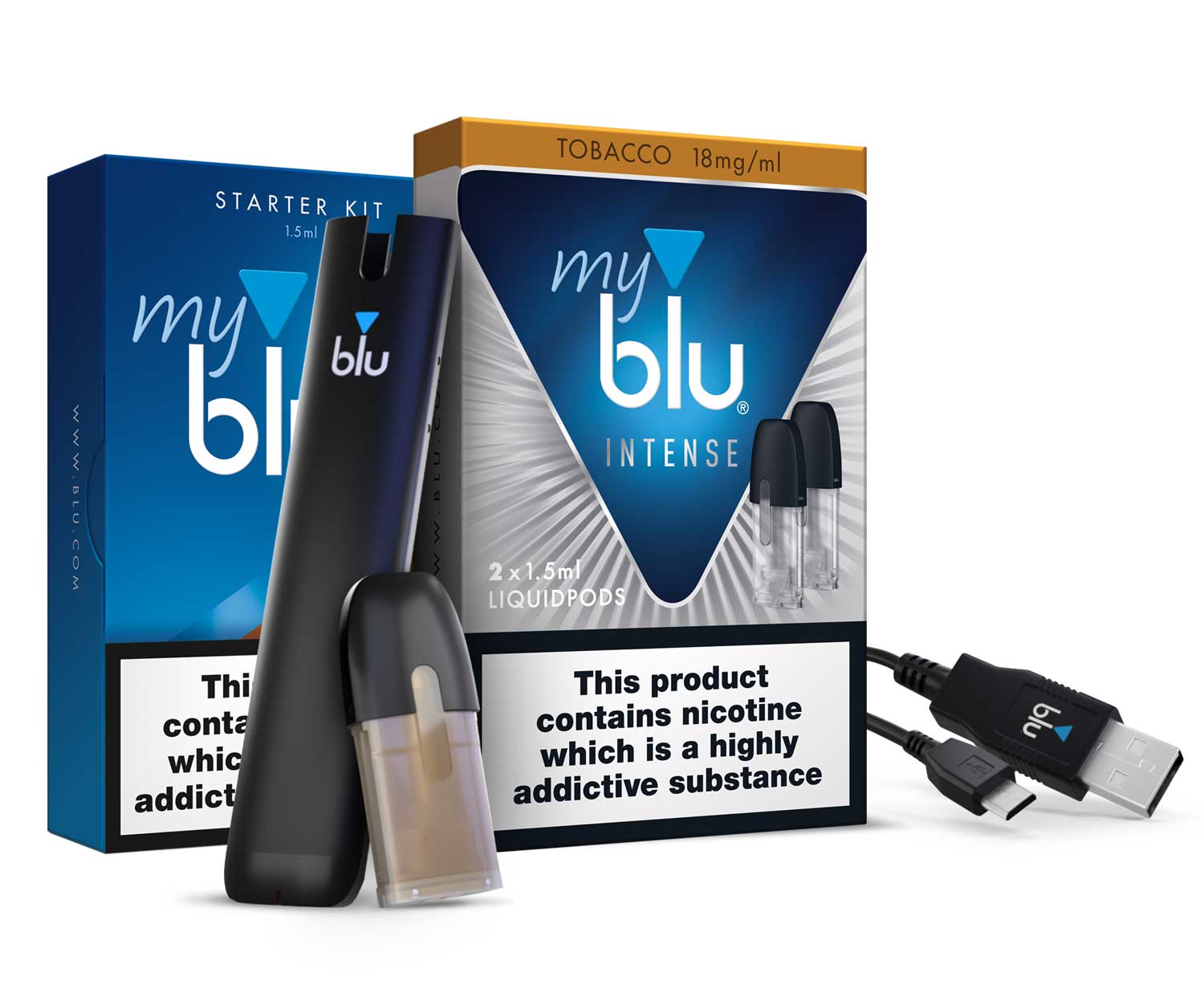
    The U.S. Food and Drug Administration issued marketing denial orders (MDOs) to Fontem U.S. for four Blu disposable products and one MyBlu e-cigarette product.

    The denied products include a closed menthol e-liquid and several flavored disposable e-cigarettes. As a result, the company may not legally market or distribute these products in the United States. However, the company may submit new applications for the products that are subject to these MDOs.

    The products that received MDOs are Blu Disposable Menthol 2.4 percent; Blu Disposable Vanilla 2.4 percent; Blu Disposable Polar Mint 2.4 percent; Blu Disposable Cherry 2.4 percent; and MyBlu Menthol 1.2 percent.

    After reviewing the company’s premarket tobacco product applications, the FDA determined that the applications lacked sufficient evidence to demonstrate that permitting marketing of the products would be appropriate for the protection of the public health, which is the standard legally required by the 2009 Family Smoking Prevention and Tobacco Control Act. 

    More specifically, the FDA said the application lacked sufficient evidence regarding harmful and potentially harmful ingredients in the aerosol for one product and battery safety for several products. Additionally, the applicant did not present sufficient data demonstrating that the new products have a potential to benefit adult smokers, in terms of complete switching or significant cigarette use reduction, that would outweigh the risk to youth, according to the agency.

  • Civil Money Penalties for 21 Vape Shops

    Civil Money Penalties for 21 Vape Shops

    The U.S. Food and Drug Administration has issued complaints for civil money penalties (CMPs) against 21 brick-and-mortar retailers for selling unauthorized Esco Bars e-cigarettes.

    In a press release, the agency stated that it had previously issued each retailer a warning letter for their sale of unauthorized tobacco products. However, follow-up inspections revealed that the retailers had failed to correct the violations.

    The agency now seeks the maximum penalty of $20,678 from each retailer.

    The complaints announced today represent the first set of CMPs FDA has filed for the sale of unauthorized Esco Bars e-cigarettes. “These retailers were duly warned of what could happen if they continued selling these unauthorized e-cigarettes,” said Brian King, director of the FDA’s Center for Tobacco Products (CTP). “They should have acted responsibly to correct the violations, but they chose not to do so and now must face the consequences of that decision. FDA won’t sit back and tolerate inaction to comply with the law.”

    Currently, $20,678 is the maximum civil money penalty amount FDA can seek for a single violation from each retailer, consistent with similar CMPs sought against retailers for the sale of unauthorized Elf Bar products in Sept., Nov., and Dec. of 2023.

    The retailers can pay the penalty, enter into a settlement agreement based on mitigation factors, request an extension of time to file an answer to the complaint, or file an answer and request a hearing. Retailers that do not take action within 30 days after receiving a complaint risk a default order imposing the full penalty amount, according to the release.

    “Today’s CMP actions are just the latest in the continued, comprehensive push by FDA to take action across the supply chain to remove unauthorized e-cigarettes, particularly those that are popular among youth, from the marketplace,” the release states. “As of Jan. 30, 2024, FDA has issued more than 440 warning letters and 88 CMPs to retailers, including brick and mortar and online retailers, for selling unauthorized tobacco products.

    “In addition to actions involving retailers, FDA has issued more than 660 warning letters to firms for illegally manufacturing and/or distributing unauthorized new tobacco products, including e-cigarettes.

    “The agency has also filed civil money penalty complaints against 48 e-cigarette firms for manufacturing unauthorized products and sought injunctions in coordination with the U.S. Department of Justice against seven manufacturers of unauthorized e-cigarette products.”

  • Bidi Vapor Appeals MDO of Tobacco Bidi Stick

    Bidi Vapor Appeals MDO of Tobacco Bidi Stick

    Bidi Vapor will appeal the U.S. Food and Drug Administration’s January 2024 decision to deny the company’s premarket tobacco product application (PMTA) for Bidi Vapor’s “Classic” tobacco-flavored Bidi Stick electronic nicotine-delivery system.

    Bidi Vapor has asked the U.S. Court of Appeals for the 11th Circuit to review the marketing denial order (MDO), which Bidi Vapor believes violates the Administrative Procedure Act. Bidi Vapor will also be seeking a stay of the MDO pending the outcome of the litigation.

    “Bidi Vapor disagrees with the FDA’s decision and is taking immediate action accordingly,” said Bidi Vapor founder and CEO Niraj Patel in a statement. “In the meantime, it is important to note that the decision only affects the ‘Classic’ or tobacco-flavored Bidi Stick. The remaining ten Bidi Stick flavors are still under FDA scientific review and remain in distribution in the United States through Kaival Brands, subject to the FDA’s enforcement discretion.”

    With its recent legal challenge, Bidi Vapor hopes to build on its record of successfully contesting adverse FDA decisions. In August 2022, the 11th Circuit set aside the original MDOs issued for its 10 nontobacco-flavored products. That ruling put the 10 PMTAs back into scientific review and allowed those flavors to remain available for sale pursuant to the FDA’s compliance policy for deemed tobacco products. During this evaluation period, the 10 nontobacco-flavored products are still under FDA enforcement discretion.

  • FDA Moves PMTA Finish Date to June 30

    FDA Moves PMTA Finish Date to June 30

    Credit: Postmodern Studio

    The U.S. Food and Drug Administration now states that it will complete all covered marketing applications by June 30. In its latest court-ordered status report, the agency stated that continued review is necessary in light of recent judicial decisions, including the D.C. Circuit’s decision in Fontem US.

    “Further, several of these remaining applications present complex scientific issues that require careful review and consideration.

    In the Fontem case, the court’s unanimous decision in Fontem US v. FDA upheld the regulatory agency’s denial of Fontem’s application to market flavored vaping products, in line with prior D.C. Circuit precedent but rejected the FDA’s denial of Fontem’s applications for unflavored products.

    The agency stated that it was also facing challenges from manufacturers that filed premarket tobacco product applications (PMTAs) that made amendments to their applications after several legal decisions were handed down by courts.

    “Many of these amendments contain substantial data and scientific explanation,” the agency wrote. “The amendments range from a few pages to hundreds of pages and were received on a rolling basis, with the most recent 2023 amendment being filed in December 2023.”

    Also, on Jan. 3, the U.S. Court of Appeals for the Fifth Circuit ruled that the FDA acted “arbitrarily and capriciously” in rejecting the premarket tobacco product applications (PMTA) of Wages and White Lion Investments, doing business as Triton Distribution, and Vapetasia for approval to sell their products in the United States.

    The 9-5 decision by the New Orleans-based 5th U.S. Circuit reversed a July 2022 decision by a three-judge panel of that court.

    The agency “sent manufacturers of flavored e-cigarette products on a wild goose chase,” telling them what would be needed to approve their products, and then denying all applications, the court said in an opinion by Judge Andrew S. Oldham. The FDA “never gave petitioners fair notice that they needed to conduct long-term studies on their specific flavored products,” Oldham wrote.

    The regulatory agency is under court order to file regular status reports on the agency’s review of pending PMTAs for new tobacco products that were on the market as of Aug. 8, 2016.

    For such new tobacco products to be lawfully marketed in the United States, the Family Smoking Prevention and Tobacco Control Act requires the FDA to complete a substantive review of the PMTA for each new tobacco product and issue a marketing granted order authorizing the sale of the product.

    The court order stems from litigation filed by health groups against the FDA seeking a court-imposed deadline for finalizing the review of the PMTAs that were filed with the agency by Sept. 9, 2020.

    The court-imposed deadline to complete the agency’s review was originally Sept. 9, 2021, which the FDA could not meet due to the extremely large number of PMTAs filed by manufacturers.

    The most recent and FDA’s seventh status report was filed on Oct. 23, 2023. Specifically, in these reports, the FDA provides an update on the progress to finalize the agency’s review of pending PMTA “covered applications.”

    A “covered application” is for new electronic cigarette/vapor products that were on the market as of Aug. 8, 2016, which had a PMTA filed with the FDA by Sept. 9, 2020, are sold under the brand names of Juul, Vuse, Njoy, Logic, Blu, Smok, Suorin, or Puff Bar, and reach 2 percent or more of the total retail sales volume in NielsenIQ’s various retail e-cigarette sales reports.

    The agency also stated that it now expects to take action on 94 percent of covered applications by March 31. The FDA stated that it would file another status report on or before April 22.

  • U.S. FDA Issues MDOs for SMOK

    U.S. FDA Issues MDOs for SMOK

    The U.S. Food and Drug Administration issued marketing denial orders (MDOs) to Shenzhen IVPS Technology Co., Ltd for 22 SMOK vaping hardware products.

    The denied products include devices, pods, atomizers, and cartridges. It’s the first time the agency has denied strictly hardware products from one company en mass.

    The products were denied because they were submitted without a specific e-liquid to be used with the devices, according to the FDA. “The denied SMOK e-cigarette products are not sold with an e-liquid. A consumer instead adds their separately purchased e-liquid into the device,” the agency wrote. “Therefore, these SMOK products have the potential to be used with any e-liquid on the market and available to the consumer, which could include tobacco-flavored and non-tobacco-flavored e-liquids.”

    The products receiving MDOs include:

    • SMOK OSUB ONE Device
    • SMOK OSUB ONE RPM Cartridge
    • SMOK RPM DC 0.8 Ω MTL Atomizer
    • SMOK OSUB ONE RPM Cartridge 3 Pack
    • SMOK RPM DC 0.8 Ω MTL Atomizer 5 Pack
    • SMOK Nfix Device
    • Nfix DC 0.8 Ω MTL Pod
    • SMOK POZZ Device
    • SMOK POZZ DC 0.8 Ω Pod
    • SMOK RPM 40 Device
    • SMOK RPM Empty Standard Cartridge
    • SMOK RPM Empty Nord Cartridge
    • SMOK RPM Mesh 0.4 Ω Atomizer
    • SMOK Nord DC 0.8 Ω MTL Atomizer
    • SMOK SCAR-P3 Device
    • SMOK SCAR-P3 Empty RPM 2 Cartridge
    • SMOK SCAR-P3 Empty RPM Cartridge
    • SMOK PRM 2 Mesh 0.16 Ω Atomizer
    • SMOK RPM Mesh 0.4 Ω Atomizer
    • SMOK Nord 2 Device
    • SMOK Nord 2 RPM Cartridge
    • SMOK Nord 2 Nord Cartridge

    After reviewing the company’s PMTAs, the FDA determined that the applications lacked sufficient evidence to demonstrate that permitting the marketing of the products would be appropriate for the protection of public health, which is the standard legally required by the 2009 Family Smoking Prevention and Tobacco Control Act. More specifically, the applicant failed to provide sufficient data to characterize constituent delivery, product stability, and product abuse liability.

    “Science is a cornerstone of FDA’s tobacco product review process, and CTP remains committed to evaluating applications based on a public health standard that considers the risks and benefits of the tobacco product to the population as a whole,” said Brian King, director of FDA’s Center for Tobacco Products. “It is the applicant’s responsibility to provide sufficient scientific evidence to demonstrate that marketing a new tobacco product is appropriate for the protection of the public health. In this case, the applicant failed to provide this evidence.”

  • Durbin Blasts FDA Failures in Vape Rules

    Durbin Blasts FDA Failures in Vape Rules

    Senator Dick Durbin

    U.S. Senate Majority Whip Dick Durbin has again decried the Food and Drug Administration on its unacceptable failure to “protect children from the dangers of vaping” as the agency continues to miss and delay critical deadlines.

    In a press release, Durbin stated that he has repeatedly criticized the FDA for its long-overdue review of premarket tobacco product applications (PMTAs) from e-cigarette manufacturers, which originally had a federal court deadline of September 9, 2021.

    FDA has missed that court-ordered deadline by 28 months as unauthorized e-cigarettes flood the market.

    During his speech, Durbin also called on the Biden Administration to swiftly implement a proposed public health rule to prohibit the production and retail sale of menthol cigarettes and flavored cigars.

    “I know this President cares deeply about the toll of cancer. It has touched his family personally, as it has mine,” the Senator said. “If we want to make a difference in the health of Americans—and set a legacy for future generations—then the Administration must finalize this public health measure to end Big Tobacco’s predatory promotion of menthol cigarettes. Lives hang in the balance.”

    The FDA stated in prior status reports for PMTAs that the agency would complete a review of 100 percent of the applications by the end of 2023. The agency is now estimating that completion of the reviews may be delayed as the FDA considers the D.C. Circuit’s opinion in Fontem US v. FDA, affirming in part and vacating and remanding in part marketing denial orders for certain vaping products.