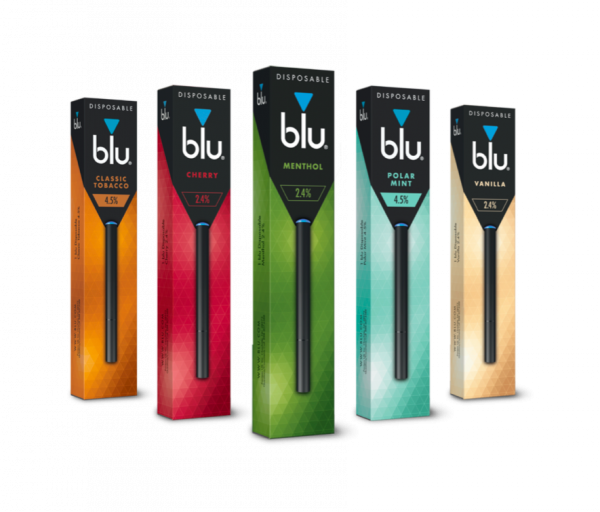
The U.S. Food and Drug Administration issued marketing denial orders (MDOs) to Fontem U.S. for four Blu disposable products and one MyBlu e-cigarette product.
The denied products include a closed menthol e-liquid and several flavored disposable e-cigarettes. As a result, the company may not legally market or distribute these products in the United States. However, the company may submit new applications for the products that are subject to these MDOs.
The products that received MDOs are Blu Disposable Menthol 2.4 percent; Blu Disposable Vanilla 2.4 percent; Blu Disposable Polar Mint 2.4 percent; Blu Disposable Cherry 2.4 percent; and MyBlu Menthol 1.2 percent.
After reviewing the company’s premarket tobacco product applications, the FDA determined that the applications lacked sufficient evidence to demonstrate that permitting marketing of the products would be appropriate for the protection of the public health, which is the standard legally required by the 2009 Family Smoking Prevention and Tobacco Control Act.
More specifically, the FDA said the application lacked sufficient evidence regarding harmful and potentially harmful ingredients in the aerosol for one product and battery safety for several products. Additionally, the applicant did not present sufficient data demonstrating that the new products have a potential to benefit adult smokers, in terms of complete switching or significant cigarette use reduction, that would outweigh the risk to youth, according to the agency.
The U.S. Food and Drug Administration has issued complaints for civil money penalties (CMPs) against 21 brick-and-mortar retailers for selling unauthorized Esco Bars e-cigarettes.
In a press release, the agency stated that it had previously issued each retailer a warning letter for their sale of unauthorized tobacco products. However, follow-up inspections revealed that the retailers had failed to correct the violations.
The agency now seeks the maximum penalty of $20,678 from each retailer.
The complaints announced today represent the first set of CMPs FDA has filed for the sale of unauthorized Esco Bars e-cigarettes. “These retailers were duly warned of what could happen if they continued selling these unauthorized e-cigarettes,” said Brian King, director of the FDA’s Center for Tobacco Products (CTP). “They should have acted responsibly to correct the violations, but they chose not to do so and now must face the consequences of that decision. FDA won’t sit back and tolerate inaction to comply with the law.”
Currently, $20,678 is the maximum civil money penalty amount FDA can seek for a single violation from each retailer, consistent with similar CMPs sought against retailers for the sale of unauthorized Elf Bar products in Sept., Nov., and Dec. of 2023.
The retailers can pay the penalty, enter into a settlement agreement based on mitigation factors, request an extension of time to file an answer to the complaint, or file an answer and request a hearing. Retailers that do not take action within 30 days after receiving a complaint risk a default order imposing the full penalty amount, according to the release.
“Today’s CMP actions are just the latest in the continued, comprehensive push by FDA to take action across the supply chain to remove unauthorized e-cigarettes, particularly those that are popular among youth, from the marketplace,” the release states. “As of Jan. 30, 2024, FDA has issued more than 440 warning letters and 88 CMPs to retailers, including brick and mortar and online retailers, for selling unauthorized tobacco products.
“In addition to actions involving retailers, FDA has issued more than 660 warning letters to firms for illegally manufacturing and/or distributing unauthorized new tobacco products, including e-cigarettes.
“The agency has also filed civil money penalty complaints against 48 e-cigarette firms for manufacturing unauthorized products and sought injunctions in coordination with the U.S. Department of Justice against seven manufacturers of unauthorized e-cigarette products.”
Bidi Vapor will appeal the U.S. Food and Drug Administration’s January 2024 decision to deny the company’s premarket tobacco product application (PMTA) for Bidi Vapor’s “Classic” tobacco-flavored Bidi Stick electronic nicotine-delivery system.
Bidi Vapor has asked the U.S. Court of Appeals for the 11th Circuit to review the marketing denial order (MDO), which Bidi Vapor believes violates the Administrative Procedure Act. Bidi Vapor will also be seeking a stay of the MDO pending the outcome of the litigation.
“Bidi Vapor disagrees with the FDA’s decision and is taking immediate action accordingly,” said Bidi Vapor founder and CEO Niraj Patel in a statement. “In the meantime, it is important to note that the decision only affects the ‘Classic’ or tobacco-flavored Bidi Stick. The remaining ten Bidi Stick flavors are still under FDA scientific review and remain in distribution in the United States through Kaival Brands, subject to the FDA’s enforcement discretion.”
With its recent legal challenge, Bidi Vapor hopes to build on its record of successfully contesting adverse FDA decisions. In August 2022, the 11th Circuit set aside the original MDOs issued for its 10 nontobacco-flavored products. That ruling put the 10 PMTAs back into scientific review and allowed those flavors to remain available for sale pursuant to the FDA’s compliance policy for deemed tobacco products. During this evaluation period, the 10 nontobacco-flavored products are still under FDA enforcement discretion.
The U.S. Food and Drug Administration now states that it will complete all covered marketing applications by June 30. In its latest court-ordered status report, the agency stated that continued review is necessary in light of recent judicial decisions, including the D.C. Circuit’s decision in Fontem US.
“Further, several of these remaining applications present complex scientific issues that require careful review and consideration.
In the Fontem case, the court’s unanimous decision in Fontem US v. FDA upheld the regulatory agency’s denial of Fontem’s application to market flavored vaping products, in line with prior D.C. Circuit precedent but rejected the FDA’s denial of Fontem’s applications for unflavored products.
The agency stated that it was also facing challenges from manufacturers that filed premarket tobacco product applications (PMTAs) that made amendments to their applications after several legal decisions were handed down by courts.
“Many of these amendments contain substantial data and scientific explanation,” the agency wrote. “The amendments range from a few pages to hundreds of pages and were received on a rolling basis, with the most recent 2023 amendment being filed in December 2023.”
Also, on Jan. 3, the U.S. Court of Appeals for the Fifth Circuit ruled that the FDA acted “arbitrarily and capriciously” in rejecting the premarket tobacco product applications (PMTA) of Wages and White Lion Investments, doing business as Triton Distribution, and Vapetasia for approval to sell their products in the United States.
The 9-5 decision by the New Orleans-based 5th U.S. Circuit reversed a July 2022 decision by a three-judge panel of that court.
The agency “sent manufacturers of flavored e-cigarette products on a wild goose chase,” telling them what would be needed to approve their products, and then denying all applications, the court said in an opinion by Judge Andrew S. Oldham. The FDA “never gave petitioners fair notice that they needed to conduct long-term studies on their specific flavored products,” Oldham wrote.
The regulatory agency is under court order to file regular status reports on the agency’s review of pending PMTAs for new tobacco products that were on the market as of Aug. 8, 2016.
For such new tobacco products to be lawfully marketed in the United States, the Family Smoking Prevention and Tobacco Control Act requires the FDA to complete a substantive review of the PMTA for each new tobacco product and issue a marketing granted order authorizing the sale of the product.
The court order stems from litigation filed by health groups against the FDA seeking a court-imposed deadline for finalizing the review of the PMTAs that were filed with the agency by Sept. 9, 2020.
The court-imposed deadline to complete the agency’s review was originally Sept. 9, 2021, which the FDA could not meet due to the extremely large number of PMTAs filed by manufacturers.
The most recent and FDA’s seventh status report was filed on Oct. 23, 2023. Specifically, in these reports, the FDA provides an update on the progress to finalize the agency’s review of pending PMTA “covered applications.”
A “covered application” is for new electronic cigarette/vapor products that were on the market as of Aug. 8, 2016, which had a PMTA filed with the FDA by Sept. 9, 2020, are sold under the brand names of Juul, Vuse, Njoy, Logic, Blu, Smok, Suorin, or Puff Bar, and reach 2 percent or more of the total retail sales volume in NielsenIQ’s various retail e-cigarette sales reports.
The agency also stated that it now expects to take action on 94 percent of covered applications by March 31. The FDA stated that it would file another status report on or before April 22.
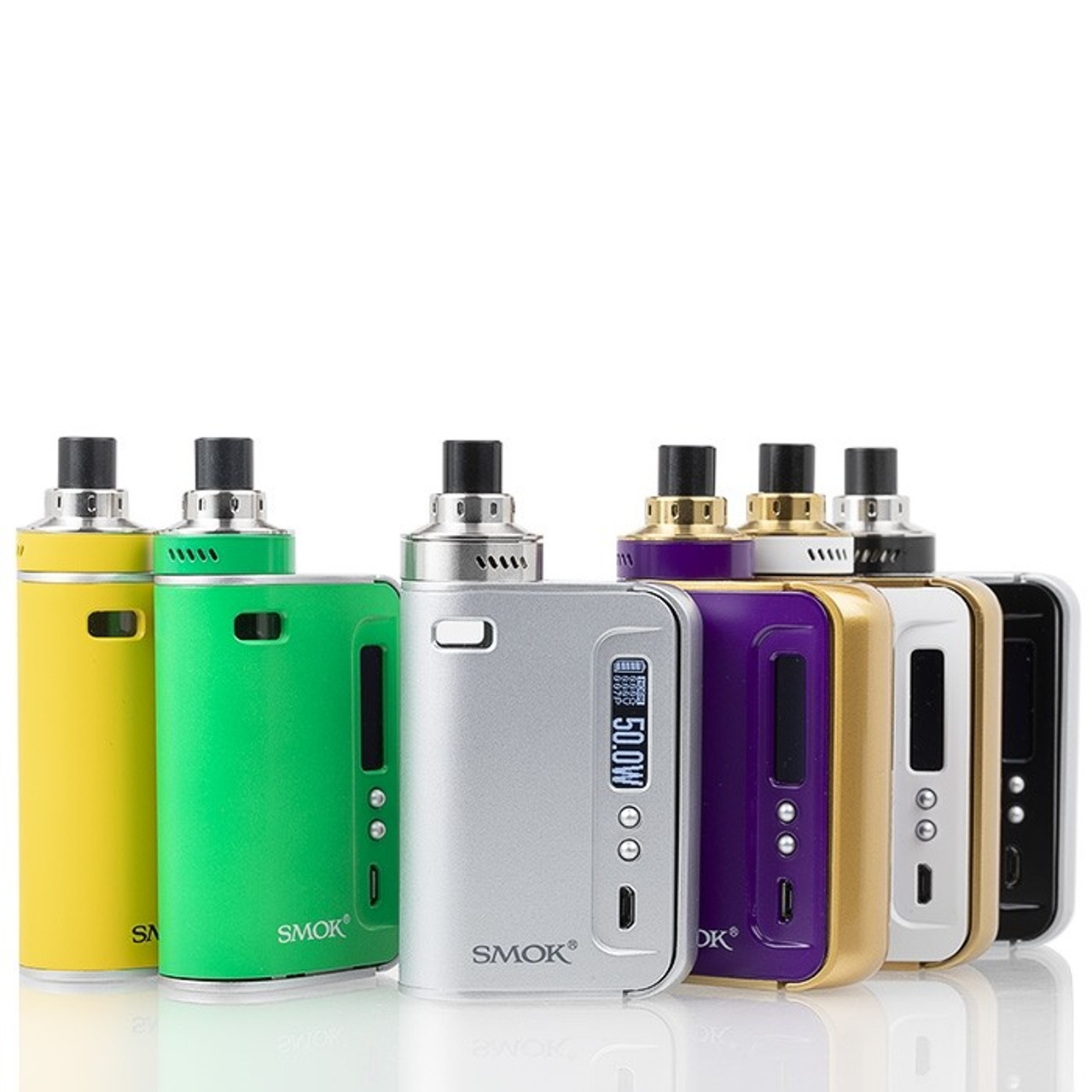
The U.S. Food and Drug Administration issued marketing denial orders (MDOs) to Shenzhen IVPS Technology Co., Ltd for 22 SMOK vaping hardware products.
The denied products include devices, pods, atomizers, and cartridges. It’s the first time the agency has denied strictly hardware products from one company en mass.
The products were denied because they were submitted without a specific e-liquid to be used with the devices, according to the FDA. “The denied SMOK e-cigarette products are not sold with an e-liquid. A consumer instead adds their separately purchased e-liquid into the device,” the agency wrote. “Therefore, these SMOK products have the potential to be used with any e-liquid on the market and available to the consumer, which could include tobacco-flavored and non-tobacco-flavored e-liquids.”
The products receiving MDOs include:
SMOK OSUB ONE Device
SMOK OSUB ONE RPM Cartridge
SMOK RPM DC 0.8 Ω MTL Atomizer
SMOK OSUB ONE RPM Cartridge 3 Pack
SMOK RPM DC 0.8 Ω MTL Atomizer 5 Pack
SMOK Nfix Device
Nfix DC 0.8 Ω MTL Pod
SMOK POZZ Device
SMOK POZZ DC 0.8 Ω Pod
SMOK RPM 40 Device
SMOK RPM Empty Standard Cartridge
SMOK RPM Empty Nord Cartridge
SMOK RPM Mesh 0.4 Ω Atomizer
SMOK Nord DC 0.8 Ω MTL Atomizer
SMOK SCAR-P3 Device
SMOK SCAR-P3 Empty RPM 2 Cartridge
SMOK SCAR-P3 Empty RPM Cartridge
SMOK PRM 2 Mesh 0.16 Ω Atomizer
SMOK RPM Mesh 0.4 Ω Atomizer
SMOK Nord 2 Device
SMOK Nord 2 RPM Cartridge
SMOK Nord 2 Nord Cartridge
After reviewing the company’s PMTAs, the FDA determined that the applications lacked sufficient evidence to demonstrate that permitting the marketing of the products would be appropriate for the protection of public health, which is the standard legally required by the 2009 Family Smoking Prevention and Tobacco Control Act. More specifically, the applicant failed to provide sufficient data to characterize constituent delivery, product stability, and product abuse liability.
“Science is a cornerstone of FDA’s tobacco product review process, and CTP remains committed to evaluating applications based on a public health standard that considers the risks and benefits of the tobacco product to the population as a whole,” said Brian King, director of FDA’s Center for Tobacco Products. “It is the applicant’s responsibility to provide sufficient scientific evidence to demonstrate that marketing a new tobacco product is appropriate for the protection of the public health. In this case, the applicant failed to provide this evidence.”
U.S. Senate Majority Whip Dick Durbin has again decried the Food and Drug Administration on its unacceptable failure to “protect children from the dangers of vaping” as the agency continues to miss and delay critical deadlines.
In a press release, Durbin stated that he has repeatedly criticized theFDA for its long-overdue review of premarket tobacco product applications (PMTAs) from e-cigarette manufacturers, which originally had a federal court deadline of September 9, 2021.
FDA has missed that court-ordered deadline by 28 months as unauthorized e-cigarettes flood the market.
During his speech, Durbin also called on the Biden Administration to swiftly implement a proposed public health rule to prohibit the production and retail sale of menthol cigarettes and flavored cigars.
“I know this President cares deeply about the toll of cancer. It has touched his family personally, as it has mine,” the Senator said. “If we want to make a difference in the health of Americans—and set a legacy for future generations—then the Administration must finalize this public health measure to end Big Tobacco’s predatory promotion of menthol cigarettes. Lives hang in the balance.”
The FDA stated in prior status reports for PMTAs that the agency would complete a review of 100 percent of the applications by the end of 2023. The agency is now estimating that completion of the reviews may be delayed as the FDA considers the D.C. Circuit’s opinion in Fontem US v. FDA, affirming in part and vacating and remanding in part marketing denial orders for certain vaping products.
Regulatory challenges and misinformation continued to test the vaping industry in 2023.
By TR staff
It remains a frustrating business environment. The vaping segment has survived despite setbacks in 2023 and continues growing as a global market. However, divergent regulatory perspectives on vaping’s harm reduction potential continue to hinder its uptake by cigarette smokers. The past 12 months could also be labeled the year of the great exodus as several vaping retailers and manufacturers went out of business. Despite the challenges, more and more former smokers continue to switch.
While several countries banned, enacted regulations or continued heavily regulating vaping products, the United States’ denials of numerous premarket tobacco product applications (PMTAs) had the greatest impact on the industry this year. The U.S. Food and Drug Administration’s ban on most products has allowed a black market of disposable vapes to become a multibillion-dollar industry. Disposable e-cigarettes account for almost 40 percent of the global vape sector, according to ECigIntelligence.
Critics have accused the industry of avoiding responsibility for the environmental damage caused by disposable vaping products while federal regulators have failed to pass measures that would make vaping components easier to recycle or more eco-friendly. Some regulations have been proposed to lessen the products’ environmental impact. For example, standards could be put in place requiring them to be reusable or mandating that manufacturers fund collection and recycling programs.
Disposable e-cigarettes currently account for about 53 percent of the multibillion-dollar U.S. vaping market, according to the Centers for Disease Control and Prevention, more than doubling in size since 2020. Several states, including New York and California, have extended product responsibility laws in place for computers and other electronics, but those rules don’t apply to vaping products. At the federal level, there are no regulations specifically for the disposal of vaping products. Without action, some experts say the devastating environmental impact could last for centuries.
Misinformation surrounding the vaping industry also continued to spread in 2023. Nearly half of cigarette smokers and young adult nonsmokers think that nicotine-based e-cigarettes have the same amount or even more harmful chemicals than regular tobacco-based cigarettes, according to a Rutgers study.
Another study found that there are also a lot of exaggerations and misinformation about vaping on social media. Some tweets exaggerate or distort claims about nicotine and addiction while others misinterpret scientific studies to promote vaping. There are also tweets that downplay the harmful effects of nicotine and promote its benefits, which are potentially problematic. Below is a month-by-month recap of the vaping industry’s biggest headlines in 2023.
January
Credit: Cerib
The upscale U.K.-based grocer Waitrose halts sales of single-use vaping products due to environmental concerns. The FDA says it will “decide within months” how to regulate legal cannabis (it still hasn’t). Vaporesso becomes the first open-system vaping device brand to obtain the ability to sell in the United Arab Emirates. The Netherlands bans flavors, and Belgium says it plans to restrict flavor names and vape devices. A 2022 article that claimed e-cigarette users faced the same cancer risk as combustible cigarette smokers is retracted by the World Journal of Oncology. Lawmakers in Taiwan ban vaping products. A U.S. district judge preliminary approves a $255 million settlement resolving consumer claims that Juul Labs deceptively marketed e-cigarettes.
February
Credit: Adobe
Hong Kong begins enforcing its ban on CBD, labeling it as a “dangerous drug” and imposing harsh penalties for its possession. Bloomberg Philanthropies commits $420 million over four years to the Bloomberg Initiative to Reduce Tobacco Use. Australia reschedules the psychedelics psilocybin and MDMA to provide access to people with post-traumatic stress disorder. Connecticut sues five companies for selling delta-8 products. Alex Norcia resigns from Filter for a job at Altria. RAI Services Co. submits a citizen petition asking the FDA to adopt a new enforcement policy directed at “illegally marketed disposable electronic nicotine-delivery system [ENDS]” products. Matthew Farrelly, former chief scientist and director of the Center for Health Analytics at RTI International, is named director of the FDA’s Center for Tobacco Products’ (CTP) Office of Science. The FDA files the first civil money penalties for illicit sales of ENDS products.
March
Credit: Ascannio
Altria Group exchanges its entire investment in Juul Labs for a nonexclusive, irrevocable global license to certain of Juul’s heated-tobacco intellectual property. Altria also agrees to acquire Njoy Holdings for approximately $2.75 billion and asks the U.S. Federal Trade Commission (FTC) to drop its 2020 challenge to the company’s 2018 acquisition of a 35 percent share in Juul Labs. The FDA proposes new requirements for tobacco product manufacturers regarding the manufacture, design, packing and storage of vaping and other tobacco products. RLX Technology reveals that its 2022 financial performance was heavily impacted by new industry regulations and e-cigarette taxes, along with Covid-related disruptions, in China. A U.S. federal judge throws out a tobacco industry lawsuit against California’s statewide ban on the sale of flavored vaping and other tobacco products. The FDA updates its definition of “tobacco products” to include nontobacco nicotine products. Two menthol Vuse flavors that received a marketing denial order (MDO) can continue to be marketed by R.J. Reynolds Vapor Co. after the federal 5th Circuit Court of Appeals issues a stay. Argentina bans imports and sales of ENDS products. Former CTP Director Mitch Zeller joins the advisory board of Qnovia, a “platform pharmaceutical” company that is developing a prescription inhaled smoking cessation therapy.
April
Credit: Jo Panuwat D
Malaysia removes e-liquid containing nicotine used in e-cigarettes and other vaping products from the country’s Poisons List of controlled substances. Greentank Technologies closes a Series B financing round worth $16.5 million with a “strategic investor group” that includes BAT-funded Canadian cannabis producer Organigram Holdings. Vuse’s U.S. market share rises from 41.5 percent while Juul’s declines to 26.1 percent. Altria’s youth marketing suit in California begins. The U.K. announces plans to give 1 million smokers free vaping starter kits to encourage them to give up tobacco products. Juul Labs settles youth marketing lawsuits with six states, bringing the total of state settlements to 45 states, with a combined price tag of more than $1 billion. Panama rejects a proposal to regulate vaping products. The High Court of Justice in London rules that Philip Morris Products’ patents protecting its tobacco-heating technology are valid. Delaware becomes the 22nd U.S. state to pass a recreational marijuana bill. Altria’s youth marketing suit in California begins.
May
Credit: MdIqbal
Australia announces that it will ban the importation of all nonprescription vaping products, including those that do not contain nicotine. R.J. Reynolds sends letters to several small vape shops threatening to sue them if the shops do not stop selling flavored vaping products. A U.K. report shows inmates are spending more than £7 million ($8.5 million) a year on e-cigarettes. Logic Technology challenges the FDA’s marketing denial of its menthol vape products. Altria strikes a $235 million deal to end a California lawsuit alleging that the company marketed vaping products to youth. Flonq launches the world’s first fully recyclable vape device—the Flonq Plus-E. Yolonda Richardson succeeds Matthew Myers as president of Tobacco-Free Kids. The FDA issues “Import Alert 98-06” detaining new tobacco products such as e-cigarettes without marketing authorization at the border. Altria completes its purchase of Njoy.
June
Credit: Timothy S. Donahue
Hawaiian law makes shipping of vaping and other tobacco products valued at more than $10,000 a misdemeanor. ANDS launches Slix, a disposable vape that it says is 99.29 percent recyclable.
Bidi Vapor sends the initial shipment of Bidi Sticks to over 900 Kwik Trip and Mapco locations.
A federal appeals court rules that the FDA acted reasonably in denying Magellan Technology’s application to market flavored vaping products.
The FDA issues warning letters to 189 retailers for selling unauthorized tobacco products, specifically Elf Bar and Esco Bars brands. Zanzibar bans the use and imports of vape products. The CTP announces that it has made significant strides in putting its Reagan-Udall Foundation recommendation-based plan for improvement into action.
July
Credit: Ascannio
Juul Labs asks the U.S. International Trade Commission (ITC) to block sales and imports of the Njoy Ace vapor device, claiming that the product infringes several Juul patents. The FTC dismissed the complaint against Njoy parent Altria Group for its purchase of a 35 percent stake in Juul Labs after Altria’s pullout. New York City accuses Magellan Technology Inc., Ecto World LLC (Demand Vape), Mahant Krupa 56 LLC (Empire Vape Distributors) and Star Vape Corp. of racketeering for selling illegal flavored vapes. Jason Carignan moves to Chemular. The FDA gives the Ohio State University Comprehensive Cancer Center a $3.9 million grant to evaluate the effects of e-cigarette flavors on the smoking behaviors of current adult smokers. Philip Morris International acquires Syqe Medical, an Israeli company, for an estimated $650 million. Juul Labs submits a PMTA to the U.S. FDA for the Juul2 system. China’s State Tobacco Monopoly Administration releases the guidelines for vape exports. A study linking nicotine vapes to liver disease was retracted from Gastroenterology Research. The FDA sends more warning letters for Esco Bars and Elf Bar sales. China vape exports top $3.36 billion for the first half of 2023.
August
Credit: Natanaelginting
Ukraine imposes a consumption tax on disposable vapes. Venezuela bans all vaping products. The Philippines passes a law forcing importers of raw materials for vaping products to seek special clearances to release shipments. High Light Vape, which sells a vape pen disguised as a highlighter, is lambasted by the media. Njoy asks the ITC to ban the import and sale of certain Juul products. New Zealand imposes new regulations to limit youth vaping. The Coalition of Asia Pacific Tobacco Harm Reduction Advocates launches its shadow report on the World Health Organization’s failing tobacco harm reduction strategy. Juul Labs announces a company restructuring aimed at reducing operating costs. Romania bans flavors for heated-tobacco products. Suriname bans the sale of all vaping products. The U.S. Court of Appeals for the D.C. Circuit sides with Fontem U.S. in a ruling that the FDA failed to conduct a proper analysis before rejecting some vaping product marketing applications.
September
Credit: Gevorg Simonyan
The U.K. Vaping Industry Association announces that it will exclude tobacco companies from its membership. Indonesia legalizes vaping. Esco Bars’ manufacturer files a lawsuit challenging the FDA’s import ban of its products. Vaporesso becomes the first licensed company to sell open systems in the UAE. New York opens state cannabis licensing to the public. The FDA sends warning letters to 15 companies that market products under the brand names Elf Bar, EB Design, Lava, Cali, Bang and Kangertech. A massive fire destroys U.K. e-liquid and hardware brand Dinner Lady’s factory. Ispire announces that its fiscal year 2023 saw a 100.4 percent and a 10.9 percent surge in cannabis and tobacco vaping product revenues, respectively. Healthier Choices Management Corp. sues R.J. Reynolds Vapor Co. seeking royalties from sales of its Vuse Alto vape pens, chargers and pre-filled liquid pods, alleging the products infringe a patent. The FDA imposes civil money penalties on 22 retailers for the illegal sale of Elf Bar/EB Design products.
October
Credit: Maurice Norbert
Philip Morris International unveils LEVIA, a zero-tobacco stick for use with its IQOS heat-not-burn device. A new study, E-Cigarette Flavor Restrictions’ Effects on Tobacco Product Sales, finds that flavor bans boost sales of traditional combustible cigarettes. U.K. Prime Minister Rishi Sunak proposes a tobacco endgame plan. The U.S. Supreme Court declines to hear Avail Vapor’s arguments against the FDA’s regulatory authorization process. ECigintelligence reports that disposable e-cigarettes account for almost 40 percent of the global vape sector. The American Vaping Association ends operations; Greg Conley joins the American Vaping Manufacturers Association. The FDA declines to issue a marketing order for flavored Vuse Alto pods. Elf Bar changes its name to defy a U.S. import ban. Njoy files lawsuits against 34 foreign and domestic manufacturers, distributors and online retailers of illicit disposable vaping products. Logic Technology Development loses a court appeal to halt the FDA’s ban on the company’s menthol-flavored pods. Czechia bans flavors for heated-tobacco products. Altria says a booming illegal disposable flavored vape market is causing a major decline in the sales of its authorized vaping products.
November
Credit: Chetroni
Italy’s Regional Administrative Court of Lazio (TAR) suspends a decree that would make CBD oil a narcotic substance until Jan. 16, 2024. The global vaping market will reach $93.94 billion in value by 2030, registering a CAGR of 16.27 percent from 2022 to 2030, according to Straits Research. BAT announces a $90.5 million investment in Organigram. Ohio becomes the 24th U.S. state to allow adult marijuana use for nonmedical purposes. Research from the United Nations suggests that toys are a much larger contributor to electronic waste than vaping products. The FDA again sends warning letters to online retailers for selling disposable products marketed under the brand names Elf Bar, EB Design, Bang, Cali Bars and Lava. The 10th Conference of the Parties (COP10) to the World Health Organization Framework Convention on Tobacco Control is postponed, officially due to unrest in the host nation, Panama.
Louisiana’s state Office of Alcohol and Tobacco Control releases a list of nearly 400 approved vape products for legal sale in the state. Juul Labs raises an estimated $1.3 billion in funding. Ispire Technology reports revenue of $42.9 million and gross profit of $6.9 million in the quarter that ended Sept. 30. The FDA increases the penalties for violations of federal nicotine product laws. PMI expands IQOS Iluma in the Middle East. New Zealand’s new coalition government announces a cancelation of the country’s controversial generational tobacco ban. The Foundation for a Smoke-Free World, which was originally funded by PMI, says it will no longer accept any monetary support from the nicotine industry. The WHO announces the dates for the resumed in-person sessions of COP10 for February 2024. Australia will ban imports of disposable vapes beginning Jan. 1, 2024. France plans to ban disposables by 2025.
December
Credit: Oleksii.
(Editor’s Note: This magazine went to press in December, so the month may be incomplete.) The FDA announces that it is now estimating that completion of PMTA reviews may be delayed as the agency considers the D.C. Circuit’s opinion in Fontem U.S. v. FDA, affirming in part and vacating and remanding in part MDOs for certain vaping products. U.S. House lawmakers demand information from federal officials on what they are doing to stop the influx of kid-appealing electronic cigarettes from China. Mexico’s Supreme Court of Justice rules that the presidential decree banning the sale of e-cigarettes is unconstitutional. The FDA announces that it has filed civil money penalty complaints against 25 brick-and-mortar and online retailers for selling unauthorized Elf Bar, EB Design and other e-cigarette products. France’s National Assembly unanimously approves a bill to ban single-use electronic cigarettes. Vuse’s market share rose from 41.5 percent to 42 percent, surpassing No. 2 Juul which dropped from 24.7 percent to 24.3 percent. Guam proposes rules to stiffen the fees and penalties for vape sales to minors.
Looking ahead
It’s impossible to predict what the vaping industry will look like by the end of 2024. Industry insiders expect regulators to crack down on disposable vaping products, and misinformation will likely continue to run wild.
The U.S. will probably see a decline in product variety because the FDA is unlikely to approve many devices. However, globally, especially in the EU and the U.K., the industry should continue to thrive and expand. More importantly, innovation should continue to thrive outside the U.S.
Gregory Conley, director of legislative and external affairs for the American Vapor Manufacturers Association, predicted at the end of 2022 that the FDA’s policy on vaping products would continue to be characterized by regulatory paralysis and the search for the least politically controversial regulatory option, and the industry wouldn’t hear rulings on many PMTAs until 2024 or later. He was correct on both counts.
Looking forward to 2024, Conley told Vapor Voice that the vaping industry should expect a turbulent ride, particularly in the United States. He predicts that the most significant hurdle remains the FDA’s CTP.
“Under the current leadership of Brian King, the agency’s stance toward vaping products has become even more antagonistic despite a drop in youth vaping to its lowest levels in a decade,” said Conley. “This tension is heightened by ongoing court cases that might force reforms within the CTP, but these changes are likely to be met with considerable internal resistance and intransigence.
“Those in the industry should not be naive. The regulatory landscape in the U.S. for vaping businesses, regardless of their size, is likely to get worse before it gets better. This is a hard truth we need to brace for.”
Beyond the federal level, a critical challenge will continue to come from state governments and major tobacco companies like Altria and R.J. Reynolds. The rise of synthetic nicotine-containing disposable vaping products, which are impacting cigarette sales and the vapor market shares of the major tobacco companies, is leading to a push for state-level PMTA registries, according to Conley.
“In essence, these bills seek to deputize state regulatory agencies to behave as mini-PMTA enforcement divisions. The true effect of these registries is to ban all products that submitted their PMTAs after September of 2020. In plain English, this means nearly every disposable vaping product on the market becomes illegal to sell,” Conley explains. “Such measures have already been implemented in Alabama, Oklahoma and Louisiana, leading to a disruption in the market dynamics. Law-abiding retailers and average adult consumers are suffering as a result.”
Globally, Conley predicts that the vaping industry will continue to go up against well-funded prohibitionist campaigns spearheaded by organizations bankrolled by Michael Bloomberg. However, there’s a silver lining: The evidence supporting regulation over outright bans continues to grow.
“I’m cautiously optimistic that we’ll see countries in Latin America and Southeast Asia begin to revisit their previous, misguided policies. Regrettably, however, the anti-disposable furor is likely to get even more heated in Europe,” said Conley. “For adult consumers looking for hassle-free nicotine consumption, there’s never been a better time than now. The market has evolved tremendously in terms of product quality and variety. However, the picture is starkly different for businesses in the vaping industry. Until there is real reform that regulates the products adults want, like flavored disposables, being successful in this industry may require risking your livelihood and potentially your freedom.”
Conley said the industry must remain vigilant because regulatory challenges, particularly in the U.S., coupled with global policy shifts and market dynamics suggest that the industry’s path will be rocky in the short term. “The hope is for a future where nicotine control policies are grounded in harm reduction principles rather than mirroring a drug war,” he said. “However, we’re currently seeing a trend that veers toward the latter.”
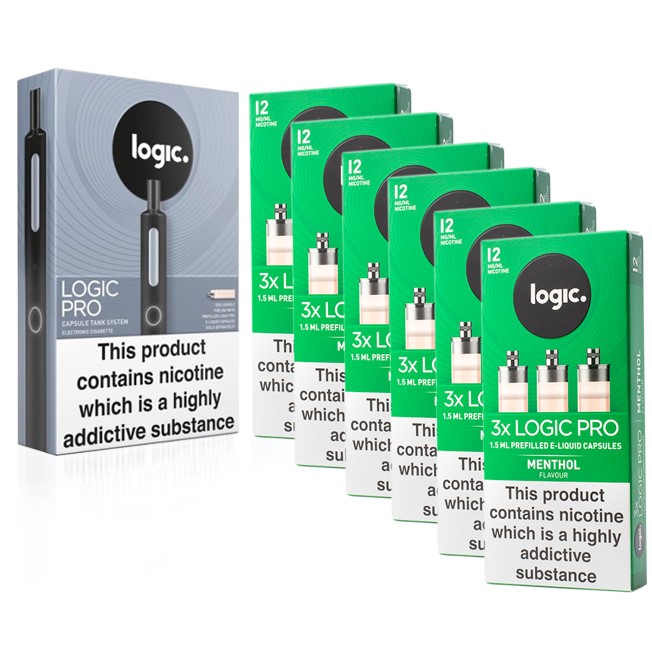
The U.S. Food and Drug Administration has defeated Logic Technology Development after the e-cigarette manufacturer asked the courts to block the regulatory agency’s market ban on Logic’s menthol-flavored e-cigarette products, according to media reports.
Logic filed a petition for review in the U.S. Court of Appeals for the Third Circuit, alleging the FDA violated the Administrative Procedure Act when it denied Logic’s premarket tobacco product application to market its menthol-flavored vaping products. The court denied that petition Thursday after concluding the FDA “based decisions on scientific judgments.”
Logic alleged it was arbitrary and capricious for the FDA to apply the same regulatory framework to menthol that it used to remove fruit- and dessert-flavored e-cigarettes from commerce. The Third Circuit Court entered a stay on the FDA’s marketing denial orders (MDOs) in December 2022. The MDOs were the FDA’s first-ever MDOs directed at menthol e-cigarette products.
The implications could be far-reaching. Reynolds American Inc. (RAI) has filed a U.S. International Trade Commission (ITC) complaint charging multiple manufacturers, distributors and retailers of several popular disposable vaping devices with unfair importation. It is one of several recent actions Reynolds has made to remove its competitor’s vaping products from store shelves.
Reynolds is asking the ITC to investigate and issue an exclusion order preventing further U.S. imports of disposable vaping products. Several legal scholars have told Tobacco Reporter that if the ITC agrees with Reynolds, all flavored disposable vaping devices without marketing authorization could be stopped at the border and prevented from entering the U.S. market.
Reynolds wants the ITC to issue a permanent “cease and desist order” prohibiting any businesses from selling illegal vaping products. The move would push nearly the entire vaping industry underground, with the exception of products owned by major tobacco companies such as Reynolds that have received marketing orders from the FDA.
Several businesses were named specifically as “peddlers of illegal disposable vapes” in the Reynolds complaint, including the “manufacturers, importers, distributors and retailers” of Breeze, Elf Bar, Esco Bar, Hyde, Puff Bar, and R&M disposable vapes.
Also named are several well-known U.S. wholesale and retailers of disposable vapes, including Element Vape, Flawless Vape, Magellan Technology, Mi-One Brands, Price Point Distributors, and Vape Sourcing.
The ITC complaint accuses what amounts to the manufacturers of all unauthorized vaping products of importing “illegal disposable vapes” in violation of Section 337 of the Tariff Act of 1930. Specifically, Reynolds claims the named businesses either falsely advertised that their products are authorized for sale by the U.S. government, failed to comply with federal laws imposing registration and reporting requirements and limitations on sales, or violated customs laws and regulations.
“As a result of the relentless influx of illegal vapor products flowing through U.S. borders, Reynolds American Inc. subsidiaries R.J. Reynolds Tobacco Co. and R.J. Reynolds Vapor Co. have filed a complaint with the U.S. International Trade Commission against more than 30 companies involved in illegally importing unregulated, youth appealing flavored disposable vapor products,” RAI wrote in a statement. “Many of the manufacturers of these disposable vapor devices intentionally and systematically market to youth, selling products with dessert and candy flavors and featuring cartoon characters.
“These illegal disposable vapor devices, which have unknown ingredients and bypass regulations, are jeopardizing public health by refusing to adhere to the laws that regulate the sale of tobacco products. The complaint requests that the ITC institute an investigation into unfair acts in the importation and sale of these Chinese-manufactured, youth appealing flavored disposable vapor devices into the United States.”
Reynolds owns the Vuse vaping brand, including the Vuse Alto. Last week, the FDA issued a marketing denial order, ordering Alto menthol refill pods off the market. The Alto device and tobacco-flavored pods are still under review by the agency. Two older Vuse vapes, the Solo and Vibe models (and their tobacco-flavored refills) are among the 23 products currently authorized by the FDA. The marketing denial order was subsequently stayed by the Fifth Circuit Court of Appeals.
In its ITC complaint, Reynolds states it has the capacity to fill any void in the market if the illegal products were removed. “Reynolds has the capacity to replace any increase in demand if the Accused Products were excluded from importation,” the complaint states. “Reynolds is willing to meet any increased demand and can do so in a commercially reasonable time, given that it already supplies the industry with significant quantities of ENDS products, as well as oral tobacco and nicotine products.”
The ITC has not yet made a decision on the complaint that was filed on Oct. 13.
“The more things change, the more they stay the same,” is an expression that has been around for almost two centuries, and it speaks to the fact that the small picture(s) of life may change, but the larger one does not. The vape industry and all the challenges and changes that have happened in the past decade are totally contrary to that famous saying.
A decade ago, the vape industry was the epidemy of the Wild, Wild West, full of vape shops springing up on every corner, and any/everyone creating e-liquids in their bathtubs at home. Regulation and competition changed all that and brought some semblance of “orderliness” to the market, but as state and federal regulations bombarded the industry, and with the FDA creating onerous and unattainable guidelines, the vape space has truly become one of survival.
I recently attended a vape event in Phoenix which brought together several dozen top manufacturers, distributors, and buyers, and universally everyone lamented the same concern: business is down.
Why is business down?
The reasons are many, including strict regulations, and now, even more enforcement of those regulations, but overall, the cause was much simpler. The huge COVID-19 rebound in 2020-22 put more money in consumers’ pockets and more time on their hands. Those issues combined created an artificial bubble that many thought would last. But time has passed. Add in the inflation that has pushed up food and other cost of living expenses, and some former necessities are now becoming unaffordable luxuries.
“It’s a balancing act between the addictive nature of some nicotine products and the limitations of buyer’s budgets,” said Jamie Reed with Simple Vape Supply from Orange County California. “I’ve been in the industry for over ten years, and this is evolution in its purest form and based around ’survival of the fittest.’”
Simple manufactures and distributes over 100 different assortments of nicotine cartridges, including disposables, including various iterations of CBD, Delta-8 and Kratom.
“It’s interesting,” Reed added. “When I got hired, I was told that there was an ‘expiration date,’ and we all knew that this industry might not last, and that the cream would rise (to the top). We planned to be one of those surviving companies, and we’ve been able to adapt to the times.”
Her company, along with many that are still around, were mostly run by rebels, radicals, and envelope pushers; and many have in fact changed accordingly, but some have merely learned how to “play the game” and outwardly appear to be toeing the line, but the reality may be different.
“We were aware that the COVID blip was a one-time event. People were home, they had government money to spend, and no one was checking in on them or requiring any urine tests. The Delta (8,10) boom really added to that, and everyone jumped on that bandwagon,” she said excitedly.
That line of CBD was an example of how the industry has and continues to push back. The FDA says you can’t do this, so the industry says, “F-you, then we’ll do that.”
With regulation eliminating or reducing product selection, almost any industry will do the same thing: adapt; repurpose, or reposition.
Of the dozens of people I spoke with at the event, the numbers (from shop owners and manufacturers) were pretty consistent, and most of them were down 20 to 30 percent. Many were saying that purchase sizes were lower than normal and a typical ten-thousand-dollar order was now half that. They saw some shops closing, but most were working on smaller revenues.
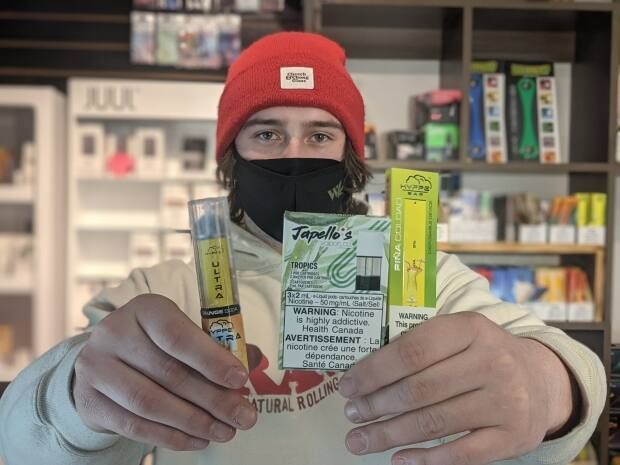
Manager J-K Thorne holds some of the flavored products that are no longer available at Wild Impulse vape shop. (Shane Hennessey/CBC)
Meanwhile, on the other side of the equation, vape liquid manufacturers who are trying to “play the game” right and submitting premarket tobacco product applications (PMTAs) to the U.S. Food and Drug Administration are frustrated at the amount of time it takes and how much money is being thrown into a (seemingly) dark hole.
I spoke with one of the owners of a large vape manufacturing business and distribution company in Idaho, and he shared some facts and figures about their process of trying to make their products “legal.” Legal, in the eyes of the FDA, has caused his company to squander over $5 million in the past few years trying to get authorization.
Mike Larsen is a detailed and focused vape guy who has been in the industry for over a decade and is with Lotus Vaping Technology, which started in 2011. As a partner and director of sales, he is on the front line of everything the company does to stay legal and compliant and is riding the roller coaster ride on a daily basis.
“Disposables have really changed the game,” he said, “and they have reduced the role of vape shops where people used to come for education and guidance. Consolidations and closures have also reduced the shop numbers by 30 to 40 percent, and now you have larger conglomerates doing the work of the multitude of shops.”
We spoke about a possible flavor ban nationally, and he said he was skeptical.
“The PMTA process has already reduced or eliminated flavors, so it may not be necessary to go to that length. There have been between six and seven million submissions by thousands of companies, and so far, just 23 have been approved. I know of a few companies that submitted over a million applications themselves. And here’s the irony: everyone approved has been a Big Tobacco company, and they make up just a fraction of the total vaping market.”
The second irony on top of that, is that those so-called approved products are ones that no one wants.
We talked about whether those approvals were fair or were the result of favoritism and bias, and he smiled since we both knew the answer.
“When you look at the PMTA process and the rigid requirements, it seems pretty obvious that they were written to the advantage of the larger, established companies, and the “small guy” had very little chance in this skewed game. You can’t even budget for something like this,” he continued. “The original filing costs over a million dollars, and I know several companies that have put another ten million in, only to get denied. Who has deep pockets like that? In 2016 I could have named over 150 liquid companies doing good business; today I can name about three dozen.”
And that is why the number of companies manufacturing tobacco and vape products is half what it was and is getting smaller every year. The FDA changes the rules of the game continually.
“There’s something happening here, but what it is ain’t exactly clear,” is the beginning line of a song that speaks to changes going on in society. That song by Buffalo Springfield may have nothing to do with vape, but the message says the same thing: there is something happening here although it may be clearer than we realize. We all knew this would happen; it was predicted a decade ago.
In the vape space, the more things change…the more things change.
Norm Bour is the founder of VapeMentors and works with vape businesses worldwide. He can be reached at norm@VapeMentors.com.