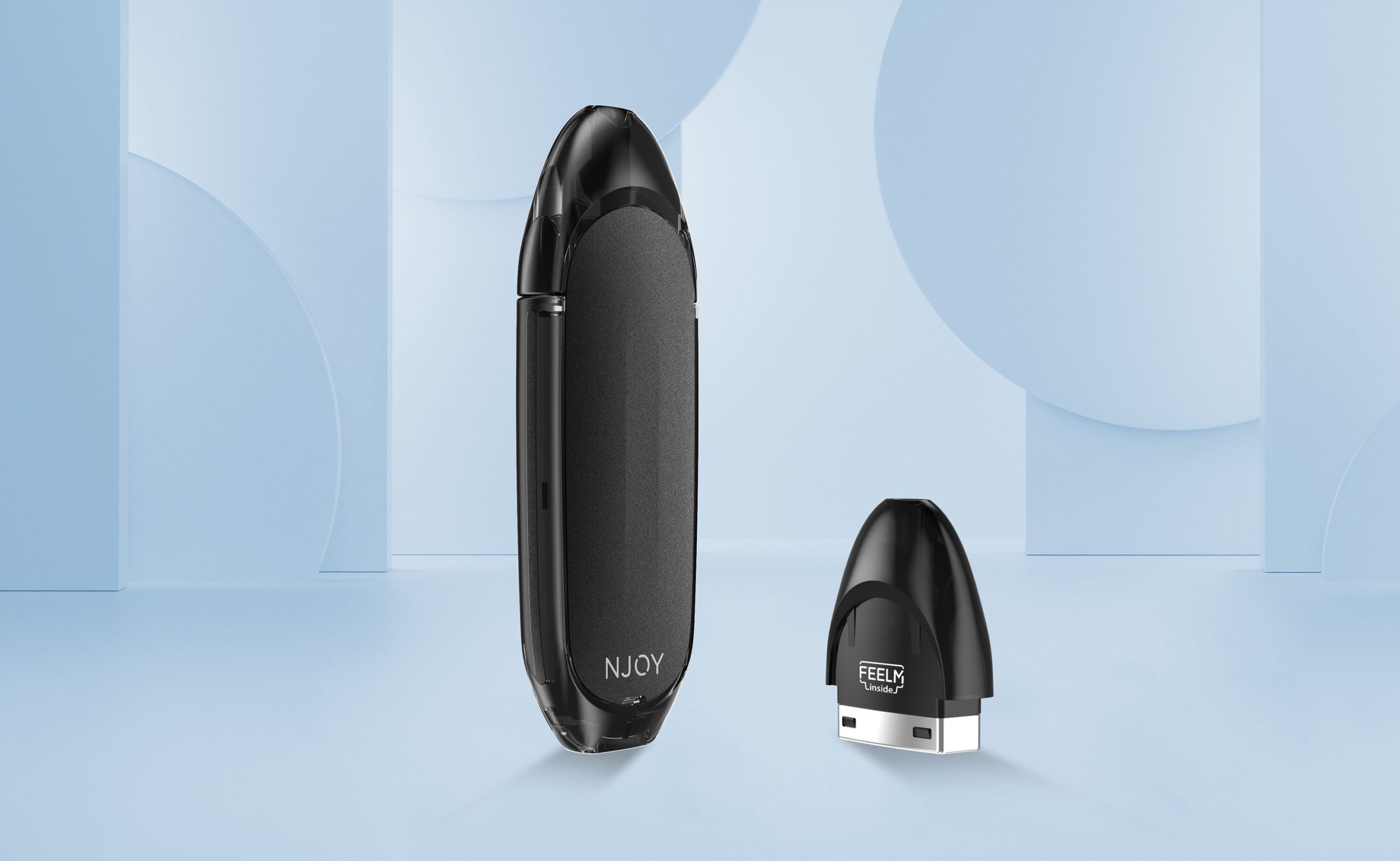
The U.S. Food and Drug Administration issued marketing denial orders (MDOs) for two menthol e-cigarette products currently marketed by R.J. Reynolds Vapor Company under the Vuse Solo brand.
Reynolds is expected to challenge the order.
The currently marketed products include the Vuse Replacement Cartridge Menthol 4.8% G1 and the Vuse Replacement Cartridge Menthol 4.8% G2, according to a statement. The company may resubmit applications or submit new applications to address the deficiencies for the products that are subject to these MDOs.
The FDA evaluates premarket tobacco product applications (PMTAs) based on a public health standard that considers the risks and benefits of the product on the population as a whole.
After reviewing the company’s PMTAs, the FDA determined that the applications lacked sufficient evidence to demonstrate that permitting the marketing of the products would be appropriate for the protection of the public health, which is the applicable standard legally required by the 2009 Family Smoking Prevention and Tobacco Control Act.
Specifically, the evidence submitted by the applicant did not demonstrate that its menthol-flavored e-cigarettes provide an added benefit for adult smokers relative to tobacco-flavored e-cigarettes.
In October last year, the FDA issued MDOs for several menthol-flavored vaping products marketed by Logic Technology Development. It was the first time the FDA issued MDOs for menthol products after receiving a scientific review.
A few days after the order was issued, Logic obtained a court order from the U.S. Circuit Court of Appeals for the 3rd Circuit that temporarily stayed the order.
The U.S. Food and Drug Administration is proposing new requirements for tobacco product manufacturers regarding the manufacture, design, packing and storage of all tobacco products.
The proposed requirements would help protect public health by, among other things, minimizing or preventing contamination and limiting additional risks by ensuring product consistency, according to an FDA statement.
“While no tobacco product is safe, this proposed rule is intended to minimize or prevent additional risks associated with these products,”
Brian King / Credit: FDA
said Brian King, director of the FDA’s Center for Tobacco Products. “Once finalized, it would establish requirements for tobacco product manufacturers that will help protect public health.”
The proposed new requirements would help manufacturers comply with the Federal Food, Drug, and Cosmetic Act by helping minimize or prevent the manufacture and distribution of tobacco products contaminated with foreign substances—such as metal, glass, and plastics—which have been found in tobacco products. T
The proposed rule would also help address issues related to inconsistencies between e-liquid product labeling and the actual concentrations in e-liquids, “Such variability can be misleading to consumers, potentially intensifying addiction and exposure to toxins,” the agency states.
The proposed rule would also establish several requirements related to the identification, tracing and corrective actions for tobacco products that don’t meet specifications or are contaminated, including for tobacco products that have already been distributed.
In the event of an issue, these requirements would require manufacturers to take corrective actions, which may include conducting a recall.
The proposed requirements apply to manufacturers of finished and bulk vaping and other tobacco products. As laid out in the proposed rule, a finished tobacco product is a tobacco product, including any component or part, sealed in final packaging; for example, an e-cigarette, a pack of cigarettes or a can of moist snuff.
A bulk tobacco product is a tobacco product that isn’t sealed in final packaging, but is otherwise suitable for consumer use.
The proposed rule establishes a framework for manufacturers to adhere to, including:
establishing tobacco product design and development controls;
ensuring that finished and bulk tobacco products are manufactured according to established specifications;
minimizing the manufacture and distribution of tobacco products that don’t meet specifications;
requiring manufacturers to take appropriate measures to prevent contamination of tobacco products;
requiring investigation and identification of products that don’t meet specifications to institute appropriate corrective actions, such as a recall; and
establishing the ability to trace all components or parts, ingredients, additives and materials, as well as each batch of finished or bulk tobacco product, to aid in investigations of those that don’t meet specifications.
The FDA will hold a public oral hearing on April 12 to gather additional comments from stakeholders, including industry, the scientific community, advocacy groups, and the public.
The proposed rule also will be available for public comment for 180 days. The agency will review all comments as part of the rulemaking process for this foundational rule.
“We remain committed to transparency and stakeholder engagement, including providing clarity to industry so that they are equipped to comply with the law,” said King. “We encourage all interested individuals and organizations to participate in the rulemaking process. When the public submits a comment based on sound grounds, that can make an important difference in the agency’s decision-making.”
The FDA will also hold a meeting of the Tobacco Products Scientific Advisory Committee (TPSAC) on May 18 to seek recommendations from the agency’s outside panel of experts on the requirements laid out in the proposed rule. As part of the TPSAC meeting, the public will have an opportunity to make oral presentations. The FDA intends to make TPSAC meeting materials available on its website no later than 48 hours before the meeting.
The U.S. Food and Drug Administration is planning to make recommendations on how to regulate the use of the popular cannabis compound cannabidiol (CBD) in food and supplements, the Wall Street Journal reported, citing agency officials.
After weighing the evidence on the compound’s safety, the FDA will decide within months how to regulate legal cannabis and whether that will require new agency rules or new legislation from Congress, according to the report.
In an interview, Janet Woodcock, the FDA’s deputy commissioner and leader of the agency’s cannabis regulation efforts, expressed concern about the safety of CBD and whether current regulatory pathways for food and dietary supplements are suitable for this substance.
However, the agency is interested in determining whether it is safe to consume CBD on a daily basis for extended periods of time or during pregnancy.
Woodcock mentioned concerns about potential effects on fertility in the future, but, at the same time, her comment signaled that the agency is working to establish regulatory frameworks for the legal sale of appropriate cannabis and cannabis-derived products.
CBD is a chemical compound found in cannabis plants. It is one of the main ingredients in cannabis, but unlike THC, it does not cause a high or have psychoactive effects.
The 2018 Farm Bill legalized hemp cultivation in the U.S., which led to significant growth in the market for CBD products. These products, sold as dietary supplements, are believed to have health benefits. As a result, many businesses in the cannabis industry are now selling CBD products across the country.
Over the last few years, the FDA posted several warning letters to companies for illegally selling products containing CBD. The companies are accused of selling products containing CBD that the FDA states some people may confuse for traditional foods or beverages that do not contain CBD or were making medical claims about their CBD products.
In 2021, The FDA told Charlotte’s Web Holdings, one of the world’s largest CBD companies, that its cannabidiol product cannot be sold as a dietary supplement, signaling that CBD reform may have to wait for congressional action.
Interested parties can now register for the Jan. 12 U.S. Food and Drug Administration seminar covering the ban of menthol flavors in tobacco products. “The Scientific Basis of Proposed Tobacco Product Standards to Prohibit Menthol as a Characterizing Flavor in Cigarettes and Flavors in Cigars” is the first FDA tobacco-related seminar of the year.
The presentation will provide an overview of the scientific evidence that informed the development of these proposed rules, with an explanation of the external peer review process the FDA utilized for review of the highly influential scientific assessments for these proposed rules.
Bridget Ambrose, director of the Division of Population Health Science in the Office of Science at the FDA’s Center for Tobacco Products, will be the speaker. Ambrose has over 20 years of experience in tobacco control and regulatory science, with specialized experience in longitudinal analyses of tobacco use.
With Republicans in control of the U.S. House, some experts expect the vape industry to thrive.
By Timothy S. Donahue
The next two years should be better than the past two years. That was the overall outlook from vapor industry experts speaking during the Vapor Technology Association’s (VTA) 2022 Post-Election Round-Up webinar in late November. Tony Abboud, executive director of the VTA, told attendees that his organization has been working diligently with two Washington, D.C.-based firms, West Front Strategies, a lobbying group, and FORA Partners, a public affairs agency, to promote the interests of the vaping industry as Republicans take over the U.S. House of Representatives in 2023. “We have a very specific agenda, some of which we’ve discussed (as an overview of what) we are pursuing,” he said. “We’ve done an enormous amount of groundwork.”
Shimmy Stein
Shimmy Stein, a partner with West Front Strategies, said the change in leadership at the House could have a positive impact on the vaping industry until at least the next election cycle. “Anytime you can take over the gavels, take over the control of the messaging, take over control of the chairmanships and the legislation, that is an important piece of governing,” he explained. “And so, while it was not to the extent or to the size which Republicans were hoping for in terms of the majority in the House of Representatives, it’s still pretty significant and will change the manner in which Washington will function.”
Over the next two years, the vaping industry should feel “a little more comfortable, a little more secure” going into a divided Congress (the U.S. Senate leadership did not change), according to Craig Kalkut, a partner with West Front Strategies. However, the vaping industry has always faced threats from both Democrats and Republicans due to their concerns over teen vaping. “We still need to work with both parties. We still could face issues and threats of overregulation and poorly conceived legislation. But the bottom line is that we will have a more comfortable environment with Republicans controlling one house of Congress,” said Kalkut.
Craig Kalkut
Reconciliation, a way for Congress to enact legislation on taxes, spending and the debt limit with only a majority vote, is no longer a threat to the vapor industry, according to Kalkut. He said that’s just not something that can happen in a divided Congress. “What that means, ultimately, is that anything that passes will need to have bipartisan support,” said Kalkut. “And because of that, [legislation] will likely be more limited, more moderate, and hopefully, if there’s any legislation passed in our area, that will be something that allows us to thrive, which addresses the concerns that linger over teen vaping but does not overregulate and drive people away from vaping.”
Kalkut also confirmed that gridlock is a concern in a divided Congress; however, gridlock could also provide incentives for both parties to compromise. “They’re both seen as in charge, so they both sometimes want to get something done. And that will bring people to the table and often over issues that are not central to either party’s ideology,” he said. “It’s hard to come to a compromise on taxes, or it’s hard to come to a compromise on healthcare … but something like vaping, perhaps there will be opportunity for common sense provisions to prevail in an area where Democrats and Republicans can come together.”
Max Hamel
Max Hamel, founding partner of FORA, said when Congress is split, the White House typically relies heavily on its executive privilege. There is no known administration agenda on vaping, so a vaping-related rule is unlikely. With Republicans in control of the House, they also head committees. The House oversight committee and its subcommittees could present opportunity for the vaping industry, according to Hamel.
“We do have new personalities on both the majority and the minority side, so they’ll probably have some growing pains,” he said. “The big question is, how does this new authority, especially in the House, get wielded[?] … whether it’s one seat or 40 seats, the authority with the majority is the same, and it is substantial from [an] investigation and oversight standpoint; [that’s] probably not necessarily true from a legislative standpoint … the oversight subcommittee, we do have the opportunity to surface some things, but it’s really an opportunity for us now to not be on defense and [to] put forth an agenda and some messaging that really focuses on the things that are advantageous to us.”
Additionally, with Juul losing its stranglehold on the vaping market, Hamel said the vaping landscape is changing. Juul became the focus to save youth from vaping, and today, Juul isn’t the focus. The market is made up of a more diverse group of companies with different technologies dedicated to harm reduction. Hamel said this is the message that should be projected. “I think our priority will be focusing on the messages that really emphasize the harm reduction aspects,” he said.
Kalkut then added that the vaping industry has an opportunity now to change the conversation, particularly with Democrats but also Republican critics and skeptics of vaping through the ever-expanding body of science that shows the relative safety and incredible potential for harm reduction that next-generation tobacco products have. “That has become more and more clear as time has gone on over the last couple of years,” he said. “I think once we show that, once we demonstrate our commitment as an association in the industry to addressing teen vaping, we have a real chance of changing the narrative.”
Ashley Davis
Ashley Davis, a founding partner at West Front Strategies, told attendees that, looking back on industry challenges, there has been success. However, her concerns going into the last Congress (2020–2022) were that she didn’t really know in what direction or how forcefully Biden would lean on the vapor industry. She says the industry “dodged a bullet.” The industry could have suffered more than it did those first two years in a Biden administration. She also said the issue of youth use will remain at the forefront of any discussion concerning electronic nicotine-delivery system products.
“We do have to still deal with the youth issue. And I think we all realize that any negative press that comes up is around the youth issue … Everyone loves a microphone. It’s a member of Congress. If there’s an issue to discuss, that’s what they’re going to discuss,” explained Davis. “[We are] trying to make sure that any bad legislation is not passed—it’s much more unlikely in this Congress than it was before.”
Taking a question from the audience, Abboud closed the session speculating on the impact of the Reagan-Udall Foundation’s external review of the U.S. Food and Drug Administration’s Center for Tobacco Products, the results of which are expected in mid-December.
Abboud said that numerous comments from staffers of the FDA for the Reagan-Udall assessment suggest the regulatory agency is in a state of disarray and is being influenced by outside forces not scientific research. He said he hopes the foundation will advise the FDA that premarket tobacco product application (PMTA) decisions should be free from any external pressures, especially political pressure.
“[The review should recommend to the FDA that PMTA] decisions must be made based upon the science that is submitted as well as making sure that the agency does, in fact, review all of the science that has been submitted as part of any applications as well as [reviewing] all of the applications that have [been] submitted,” said Abboud. “Because that was another big failing of the current process where applications have been rejected [without a full review].”
The U.S. Food and Drug Administration has issued marketing denial orders (MDOs) for several menthol-flavored vaping products marketed by Logic Technology Development. The products include the Logic Pro Menthol e-Liquid Package and Logic Power Menthol e-Liquid Package. It’s the first time the FDA has issued MDOs for menthol products after receiving a scientific review.
The move seems inline with the regulatory agency’s goal to ban menthol flavors from tobacco products. The FDA also isn’t expected to approve any flavored vaping product other than tobacco.
“Ensuring new tobacco products undergo premarket evaluation is a critical part of the FDA’s work to reduce tobacco-related disease and death,” said Brian King, director of the FDA’s Center for Tobacco Products (CTP), in a release. “We remain committed to evaluating new tobacco products based on a public health standard that considers the risks and benefits of the tobacco product to the population as a whole.”
Gregory Conley, director of legislative and external affairs for the American Vapor Manufacturers Association, told Tobacco Reporter that the latest move by the FDA to ban menthol vaping flavors is reminiscent of the agency’s “fatal flaw” review of PMTAs that resulted in millions of denials. The term “fatal flaw” was used by the FDA for PMTA submissions that didn’t have specific studies. The term has been at the center of nearly all lawsuits filed against the FDA for its handling of the PMTA process.
“The dysfunction at the FDA knows no bounds. For the last year-plus, the FDA has sat back deferred decision making on menthol vaping products,” Conley said. “Lest anyone believe that FDA was hard at work coming up with ways to achieve balance, today they revealed that their big plan for menthol vaping products is to follow the exact same ‘fatal flaw’ review process that has led to dozens of lawsuits being filed against the agency.”
The agency stated that after reviewing the company’s premarket tobacco product applications (PMTAs), the FDA determined that the applications “lacked sufficient evidence to demonstrate that permitting the marketing of the products would be appropriate for the protection of the public health (APPH), the applicable standard legally required by the 2009 Family Smoking Prevention and Tobacco Control Act.”
The FDA stated that the evidence provided within Logic’s denied PMTAs did not demonstrate that menthol-flavored e-cigarettes are more effective in promoting “complete switching or significant cigarette use reduction” relative to tobacco-flavored e-cigarettes.
Logic must now decide if it will resubmit its applications or submit new applications to address the deficiencies for the products that are subject to the MDOs. However, these acts could prove futile since the FDA states that for non-tobacco-flavored e-cigarettes, including menthol-flavored e-cigarettes, “existing evidence demonstrates a known and substantial risk” with regard to youth appeal, uptake and use.
“The FDA conducts a rigorous, scientific review of submitted premarket tobacco product applications, evaluating the data for each product to determine if it meets the public health standard,” said King. “In this case, the applicant did not provide sufficient scientific evidence to show that the potential benefit to adult smokers outweighs the risks to youth.”
A recently accepted manuscript of an article set for publication in Nicotine & Tobacco Research found that flavored vaping and other tobacco sales restrictions in California did not affect youth e-cigarette use.
The MDO letter that Logic received today is not limited to the two products named above, according to the agency. In general, the FDA publicly names only products that the applicant is marketing to avoid potential disclosure of confidential commercial information.
In addition to ensuring that Logic complies with this order, the FDA intends to ensure compliance by distributors and retailers. Specifically, the FDA notes that all new tobacco products on the market without the “statutorily required premarket authorization” are marketed unlawfully and their distribution or sale is subject to enforcement action.
Recently, the U.S. Department of Justice filed complaints for permanent injunctions in federal district courts against six e-cigarette manufacturers on behalf of the FDA. The cases represent the first time the FDA has initiated injunction proceedings to enforce the Federal Food, Drug, and Cosmetic (FD&C) Act’s premarket review requirements for new tobacco products.
Retailers should contact Logic with any questions about products in their inventory.
New data from the 2022 National Youth Tobacco Survey (NYTS) shows that 2.5 million U.S. youth use e-cigarettes, according to the published findings in the Morbidity & Mortality Weekly Report released by the U.S. Food and Drug Administration in conjunction with the Centers for Disease Control and Prevention.
“The FDA remains deeply concerned about e-cigarette use among our nation’s youth. It’s clear that we still have a serious public health problem that threatens the years of progress we have made combatting youth tobacco product use,” said FDA Commissioner Robert M. Califf. “We cannot and will not let our guard down on this issue. The FDA remains steadfast in its commitment to using the full range of our authorities to address youth e-cigarette use head-on.”
The study shows that about one in 10 middle school (3.3 percent) and high school (14.1 percent) students reported current e-cigarette use; current use is defined as use within the past 30 days. About 85 percent of surveyed students reported using flavored e-cigarettes while 27.6 percent reported daily use. Respondents most commonly used disposables, with Puff Bar being most common (14.5 percent) followed by Vuse (12.5 percent) and Hyde (5.5 percent). Puff Bar and Vuse were pre-specified options on the survey, but Hyde was written in by students as their preferred brand.
Since methodology changes occurred, including in survey administration and data collection procedures due to the Covid-19 pandemic, comparisons between the 2022 NYTS and previous years is limited.
Following the release of this data, the FDA has issued a warning letter to Puff Bar for receiving and delivering e-cigarettes in the U.S. without a marketing authorization order. The FDA has requested a response within 15 working days of receiving the letter, detailing how the company intends to address the FDA’s concerns, including the dates on which they discontinued the sale and/or distribution of these tobacco products and plans for maintaining compliance with the Federal Food, Drug and Cosmetic Act. Failure to address the violations puts the manufacturer at risk of regulatory action, such as a civil money penalty, product seizure and/or injunction.
The Puff products subject to this warning letter are nontobacco nicotine products.
After reviewing premarket tobacco product applications for 32 Hyde e-cigarettes, the FDA issued marketing denial orders (MDOs) for these applications submitted by Magellan Technology Inc. In conducting its scientific review, the FDA determined that the applications lacked sufficient evidence demonstrating that the products would provide a benefit to adult users that would be adequate to outweigh the risks to youth. No Hyde products have received marketing authorization orders from the FDA.
“Congress gave the FDA authority to hold manufacturers and retailers who violate the law accountable,” said Brian King, director of the FDA’s Center for Tobacco Products. “FDA is actively working to identify violations and to swiftly seek corrective actions, particularly for products popular among youth. We will use all compliance and enforcement tools available to us, as appropriate, to protect our nation’s youth.”
During an exclusive interview with the Associated Press, the director of the U.S. Food and Drug Administration’s Center for Tobacco Products (CTP), Brian King, said the FDA is well on its way in setting a foundation for substantial reductions in combustible tobacco smoking with the product standards such as a menthol ban and flavor bans for e-cigarettes and cigars.
When asked about several surveys that have shown many adults think e-cigarettes are as dangerous as traditional cigarettes, King said he was fully aware of the misperceptions surrounding vaping products those misperceptions aren’t consistent with the known science.
“We do know that e-cigarettes — as a general class — have markedly less risk than a combustible cigarette product,” King said. “That said, I think it’s very critical that we inform any communication campaigns using science and evidence. It has to be very carefully thought out to ensure that we’re maximizing impact and avoiding unintended consequences.”
King also said he believes “there’s a lot of really important science and innovations” that have occurred in the vaping industry in recent years, adding that the most notable is nicotine salts in e-liquids.
“We know that when you smoke a tobacco product, it’s a very efficient way to deliver nicotine across the blood-brain barrier. So it’s been very difficult to rival that efficiency in another product,” said King. “But in the case of nicotine salts you have the potential to more efficiently deliver nicotine which could hold some public health promise in terms of giving smokers enough nicotine that they would transition completely.
“But you also have to consider the opposite side of the coin, which is the inherent risks of initiation among youth. So I do worry about that … there’s a lot happening and I think that it could be promise or peril. But I think it’s important that the science drives that.”
The U.S. Court of Appeals for the Eleventh Circuit has ruled that the U.S. Food and Drug Administration’s marketing denial orders (MDOs) for Kaival Brands’ Bidi Vapor products are arbitrary and capricious.
“The Administration refused to consider the marketing and sales access restrictions plans based on both its need for efficiency and its experience that the marketing and sales access restrictions do not sufficiently reduce youth use of electronic nicotine products,” Chief Judge William Pryor wrote. “Because ‘agency action is lawful only if it rests on a consideration of the relevant factors,’ and the Administration failed to consider the marketing and sales access restrictions plans, the marketing denial orders were arbitrary and capricious.”
In the court’s 2-1 split decision, additionally, the majority stated:
The court recognizes relevant distinctions between closed/cartridge systems (that are easy to conceal and use) and the open tank liquids sold in vape shops;
FDA’s refusal to review marketing plans was error and not harmless (disagreeing with Fifth and DC Circuits).
In the 70-page opinion, Bidi Vapor, Diamond Vapor, Johnny Copper, Vapor Unlimited, Union Street Brands and Pop Vapor, the petitioners in the case, had all appeals granted, denial orders vacated and remanded.
In her dissent, Judge Robin Stacie Rosenbaum wrote, “Spoiler alert: This opinion contains spoilers on how the U.S. Food and Drug Administration will resolve petitioner vaping product companies’ premarket tobacco product applications on remand from this appeal.”
She then stated “never mind. There’s nothing to spoil here. Anyone who knows all the relevant facts necessarily already knows how this one ends.”
She stated that the while the majority faulted the FDA for not considering the companies’ proposed restrictions on youth use, the FDA’s framework for evaluating PMTAs leaves “no room for doubt that the FDA will deny—in fact, under the Family Smoking Prevention and Tobacco Control Act, must deny—the applications on remand. To paraphrase the Borg, then, remand is futile.”
The U.S. Food and Drug Administration Today issued a final guidance on guidance perception and intention studies.
The guidance, “Tobacco Products: Principles for Designing and Conducting Tobacco Product Perception and Intention Studies,” is intended to help applicants design and conduct tobacco product perception and intention (TPPI) studies that may be submitted as part of a modified risk tobacco product (MRTP) application, a premarket tobacco product application (PMTA), or a substantial equivalence report (SE Report).
TPPI studies can be used to assess, among other things, individuals’ perceptions of tobacco products, understanding of tobacco product information (e.g., labeling, modified risk information), and intentions to use tobacco products, according to the FDA.
These studies provide critical information during the review of product applications and this guidance provides recommendations on how to perform these studies.
The final guidance addresses several scientific issues for applicants to consider when designing and conducting TPPI studies to support tobacco product applications:
Developing study aims and hypotheses
Designing quantitative and qualitative studies
Selecting and adapting measures of study constructs
Determining study outcomes
Selecting and justifying study samples
Analyzing study results
The guidance document is intended to provide clarity to applicants regarding existing requirements under the law, according to FDA.
“FDA guidance documents, including this guidance, should be viewed as recommendations for consideration, unless specific regulatory or statutory requirements are cited,” the release states.