Tag: Malaysia

  • JTI Malaysia Backs Phased Tobacco Excise Hike, Stresses Illicit Concerns

    JTI Malaysia Backs Phased Tobacco Excise Hike, Stresses Illicit Concerns

    JTI Malaysia voiced support for the government’s phased tobacco excise increases for budget 2026, starting November 1, describing the approach as balanced for revenue stability and enforcement continuity. The company emphasized that illicit cigarettes remain a major concern, urging continued coordination between the Ministry of Finance, Royal Malaysian Customs, and industry players to ensure tax adjustments are matched by strong border enforcement.

    JTI also expressed disappointment that vape products were excluded from excise measures, despite full regulatory parity under the 2024 Control of Smoking Products for Public Health Act.

  • Malaysian Health Ministry Proposes Vape Liquid Tax Increase

    Malaysian Health Ministry Proposes Vape Liquid Tax Increase

    The Malaysian Ministry of Health (MOH) has proposed an increase in excise duty on vape liquids ahead of the government’s plan to ban electronic cigarettes and vaping products completely. The excise tax would be set at MYR4 ($0.94) per mL, a tenfold increase, according to The Edge Malaysia.

    The proposal was submitted to the Ministry of Finance (MOF) for consideration, days before the 2026 budget is set to be tabled.

    “This is the ministry’s recommendation to the MOF for review and approval,” said Deputy Health Minister Lukanisman Awang Sauni during a question and answer session. The deputy minister explained that a standard pack of 20 cigarettes is equivalent to 200 puffs and taxed at MYR8 per pack, while 1 mL of vape liquid is equivalent to 100 puffs but taxed at 40 sen per milliliter (for nicotine and non-nicotine liquids). This means vapers pay significantly less tax per milligram of nicotine than cigarette smokers, he said.

    “Currently, one pack of cigarettes equals about 2 mL of vape liquid, but the tax on vape nicotine is only around 10% of cigarette tax. This disparity creates a large price gap,” said Datuk Wan Saifulruddin Wan Jan, who argued that the price gap encourages smokers to vape rather than quit altogether.

    The proposal is facing pushback from the industry, however.

    “A single-fold tax hike is already drastic in many ways. A tenfold is just sweeping the real issue under the rug,” said Ridhwan Rosli, Malaysian Vape Chamber of Commerce (MVCC) secretary-general. “It seems like they are changing their policy every year while the previous policy is just about to take place.”

    Ridhwan stated that the industry is proposing a maximum tax rate of 80 sen per milliliter.

    “As currently we are faced with a lot of new costs when it comes to going through the legal process of registration, etc., it is sad that the legal industry players are being punished for the wrongs of illicit products,” he said. There are worries that the drastic tax increase will increase illicit trade as well.

    Additionally, the government plans a full ban on e-cigarettes and vapor products.

    “The Health Ministry is now moving toward a full ban on e-cigarettes and vape products,” said Lukanisman. “The proposal will be tabled to the Cabinet this year for policy endorsement. The prohibition will be implemented in phases through enforcement, education, and community support.”

  • Vape Industry Slams Malaysia’s Proposed Ban, Points to Illegal Trade

    Vape Industry Slams Malaysia’s Proposed Ban, Points to Illegal Trade

    Malaysia’s vape industry has hit back at a proposed government ban, with the Malaysia Retail Electronic Cigarette Association (MRECA) warning it would wipe out years of investment and punish law-abiding businesses. “Why should there be a ban on vape products when those that have undergone [Ministry of Health’s] stringent approval process are already in the market?” asked MRECA president Datuk Adzwan Ab Manas, noting companies have spent millions on compliance, safety testing, and labelling.

    Adzwan said the real problem lies with unapproved products and criminal misuse, not licensed businesses. He urged enforcement agencies to intensify raids and penalties against illegal sellers, warning that a blanket ban would only fuel smuggling and expand the black market.

    MRECA members, who have upgraded facilities and testing systems at significant cost, fear massive job cuts and financial losses if prohibition goes ahead. “The solution is not prohibition,” Adzwan said. “The solution is cooperation, enforcement, and fairness. We must not undermine a regulated industry that has demonstrated its willingness to comply with the law and contribute responsibly to the economy.”

  • Malaysia to Enforce Tobacco Display Ban This Week

    Malaysia to Enforce Tobacco Display Ban This Week

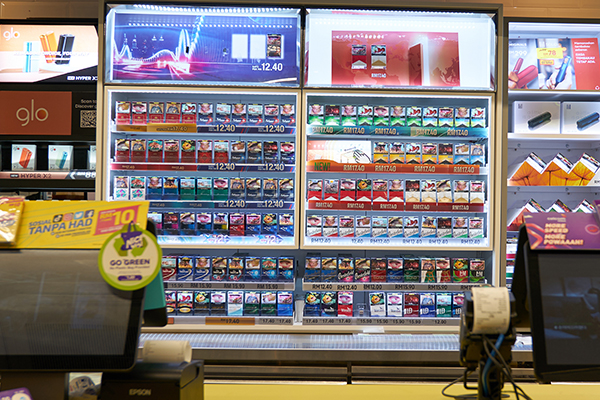
    Restaurants and retail outlets across Klang Valley, Malaysia, are racing to comply with the upcoming tobacco display ban that takes effect October 1 under the Control of Public Health (Control of Sale) Regulations 2024. Operators have been covering cigarette shelves with shutters, tinted glass, and steel panels, while some businesses have chosen to stop selling tobacco products altogether.

    Industry associations say most members are on track, though challenges remain for smaller operators. “Some smaller operators may face challenges in terms of space and storage, but overall, members are aware that enforcement begins October 1, and are preparing accordingly,” said Datuk Jawahar Ali Taib Khan, president of the Malaysian Muslim Restaurant Owners’ Association, which represents about 3,500 operators. The Petaling Jaya Coffeeshop Association added that shutters supplied by tobacco companies helped speed compliance, though design preferences vary.

    While operators brace for the ban, some anticipate a dip in cigarette sales and call for clearer guidelines and enforcement against illicit products. “Hopefully, the government will conduct frequent inspections to prevent the sale of illegal cigarettes as well,” Jawahar said. More than 51,000 shops nationwide will be affected by the new ruling.

  • Malaysian Think Tank Warns Vape Bans Will Fuel Black Market

    Malaysian Think Tank Warns Vape Bans Will Fuel Black Market

    Policy think tank Datametrics Research and Information Sdn Bhd (DARE) cautioned that state or nationwide vape bans in Malaysia could backfire by boosting the illicit market, undermining investor confidence, and costing the government tax revenue and jobs.

    The warning follows a survey by the Malaysian Vapers Alliance showing 74% of consumers fear bans will drive illegal sales, while 80% worry about unsafe, unregulated products. DARE Managing Director Pankaj Kumar said prohibition “has never worked” and argued that enforcement of existing law under Act 852 is a more effective solution.

    Malaysia’s vape market, once worth RM3.48 billion ($835 million) and supporting 31,500 jobs, has sharply contracted since new regulations took effect, with registered brands plunging from 3,200 to 390. DARE stressed that demand remains strong, but inconsistent state and federal policies are pushing consumers to untaxed and unsafe products.

  • Concern That Malaysian Retailers Won’t be Ready for Vape Display Ban

    Concern That Malaysian Retailers Won’t be Ready for Vape Display Ban

    Anti-tobacco groups are raising concerns that some Malaysian retailers are still not compliant with the tobacco and vape retail display ban (RDB), which is scheduled for full enforcement on October 1 under the Control of Smoking Products for Public Health Act 2024 (Act 852). The Malaysian Council for Tobacco Control (MCTC) noted that out of more than 51,000 retailers nationwide, a significant number have yet to install the required enclosed cabinets for tobacco and vape products. Observations from the field show some stores leaving certain cigarette products openly displayed and vape products in glass cases.

    MCTC urged the Ministry of Health not to grant exceptions, though it suggested temporary measures—such as covering products with cloth or canvas—if cabinets are still being installed. The council warned that narratives claiming the ban harms small businesses are being used by some retailers to rally political support.

  • MRECA: Should Hear from All Parties, Not Rely on “Biased” Vape Report 

    MRECA: Should Hear from All Parties, Not Rely on “Biased” Vape Report 

    The Malaysia Retail Electronic Cigarette Association (MRECA) voiced concern over the Health Parliament Special Select Committee’s (PSSC) latest report, which proposes a blanket ban on the sale and use of e-cigarettes and vape. MRECA said the report was biased and prepared without consulting key stakeholders, including manufacturers, importers, distributors, consumers, and independent experts.

    “The industry supports firm and balanced regulations, including age restrictions, product standards, and consumer safety measures,” MRECA said in its statement. “However, the process must be transparent and inclusive. Allegations made against the industry should be reviewed and verified with scientific evidence, not assumptions.”

    The association urged the Health PSSC to hold consultation sessions with all stakeholders before finalizing recommendations. “Without a fair and comprehensive process, a blanket ban would unfairly punish the industry as a whole,” MRECA said. “The vape sector should be seen as part of the solution, not part of the problem.”

  • Malaysian Ministry Slammed for Lack of Transparency on Vape Policy

    Malaysian Ministry Slammed for Lack of Transparency on Vape Policy

    Today (September 3), the Consumer Choice Center (CCC) Malaysia criticized the Ministry of Health for withholding details of a July 21 closed-door briefing on e-cigarettes and vaping from both the public and most Members of Parliament. It said, “to date, the details of this briefing have not been made available to the public or Members of Parliament beyond the [Parliamentary Special Select Committee (JKPK)]. Requests from other MPs for more information were reportedly dismissed on the grounds that the session was strictly an internal JKPK matter.”

    According to CCC Malaysia Country Associate Tarmizi Anuwar, the ministry’s lack of transparency and its plan to propose a nationwide vape ban undermine democratic accountability and risk driving consumers to illicit markets. The CCC warned that the proposed prohibition would be premature given the recent enactment of the Control of Smoking Products for Public Health Act 2024 (Act 852), inconsistent across jurisdictions, and contradicted by international evidence showing bans fail to curb use.

    The group urged the government to instead form an Implementation Committee on Vape Policy with federal, state, consumer, and industry representation to ensure coherent enforcement and evidence-based regulation.

  • Malaysian Vapers Alliance Warns Ban Risks Fueling Illegal Market

    Malaysian Vapers Alliance Warns Ban Risks Fueling Illegal Market

    The Malaysian Vapers Alliance (MVA) cautioned that uncertainty over state and potential nationwide vape bans undermines the Control of Smoking Products for Public Health Act 2024 (Act 852) and drives consumers toward illegal channels. MVA president Khairil Azizi Khairuddin said a recent survey of 641 consumers found 74% fear bans will expand the illicit market, while 80% worry unregulated products could be unsafe. “Prohibition, in any form, is not the answer,” he said, urging consistent enforcement of Act 852 instead of new restrictions.

    The survey showed 83% of respondents were aware of the law’s implementation in October 2024, and 68% preferred buying regulated products. Yet MoH data indicates legal options are shrinking, with registered vape brands plunging from 3,200 before the law to 390 today. Khairil warned that crackdowns on illegal sales, including drug-laced liquids, prove non-compliant products stem from illicit trade, not regulated businesses.

  • Malaysia: With Rising Illicits and Looming Ban, Vape Sellers Told to Switch Businesses

    Malaysia: With Rising Illicits and Looming Ban, Vape Sellers Told to Switch Businesses

    Vape sellers in Sarawak, Malaysia, have been told to shift into other lines of business as the state government moves toward a full ban on the sale and use of electronic cigarettes. Deputy Minister for Youth, Sports and Entrepreneur Development Ripin Lamat said businesses should “gradually transform and venture into more promising industries” such as food and beverage or agribusiness, warning that vape products “will destroy our young generation and ultimately undermine the values of future generations.”

    The Sarawak government is preparing legislation to formalize the ban, including a Cabinet paper that is currently under review with input from the state attorney general, secretary, and financial officer. The move follows earlier remarks from state officials linking vape use to drug abuse risks, and aligns Sarawak with several other Malaysian states.

    Similar bans have led to rising black market trade in other markets, and business officials worry the results will be similar in Malaysia, where illicit products are already becoming a problem. A Nielsen survey from May found that 55% of cigarettes sold in Malaysia are illicit, mostly smuggled from Vietnam, China, and Indonesia via ship-to-ship transfers along the east coast, costing the government RM2 billion ($480 million) in lost tax revenue each year.

    Customs has stepped up enforcement with AI scanners, body cameras, and tighter port controls, raising revenue collection by 19% in 2024. However, syndicates remain entrenched, aided by corruption and weak penalties, and officials warn that without stronger naval patrols, tougher laws, and better resources, the black market will continue draining state funds.