A new webpage was published by the U.S. Food and Drug Administration of all the tobacco products-related citizen petitions received by the agency’s Center for Tobacco Products (CTP).
A citizen petition is a way for the FDA to give individuals, regulated industry representatives, or consumer groups to petition the agency to issue, amend, revoke a regulation, or take other administrative action. The requirements for a citizen petition are set out in the Code of Federal Regulations.
As part of CTP’s stated commitment to increase transparency, the webpage was developed to provide the public with more easily accessible and user-friendly information about tobacco product-related citizen petitions submitted to FDA and the center’s responses.
This webpage was one of the immediate actions toward transparency outlined by CTP Director Brian King in CTP’s Response to the Reagan-Udall Foundation’s report.
The National Police Agency confirmed to Taiwan News that police can now issue on-the-spot fines of up to TWD10,000 ($330) to those caught vaping after Taiwan’s legislature passed amendments to Taiwan’s Tobacco Hazards Prevention Act.
E-cigarette users can either be fined on the spot, or photo and video evidence can be used by the government to send the fines to violators’ registered addresses, similar to fines currently issued for smoking in nonsmoking areas, jaywalking and other minor offenses.
The fine for vaping is now the same as for smoking in areas designated as nonsmoking, between TWD2,000 and TWD10,000.
The amendments also increase the legal age for purchasing cigarettes from 18 to 20 and prohibit the sale of e-cigarettes and heated-tobacco products. Importers, manufacturers and sellers can now be fined up to TWD50 million.
The government of Hong Kong has decided to reverse its ban on the transshipment of vapor products, reports Loadstar.
Media reports claim the banned cargo amounts to about 330,000 tons a year—the equivalent of some 10 percent of Hong Kong’s annual export volumes by air, according to the Hong Kong Association of Freight Forwarding and Logistics.
The value of the re-export cargo affected by the ban was estimated to exceed CNY120 billion ($17.33 billion).
While some transshipment by air had continued to be permitted, beginning in April of last year, vapes entering Hong Kong by land or sea for onward transport by air were banned. However, with the bulk of these products made in neighboring Dongguan, exporters were keen to ship them via land to Hong Kong International Airport.
Once the proposal is passed, the goods will be able to enter Hong Kong through a secure channel on dedicated barges and be delivered straight to the airport.
“The scheme is only to facilitate direct transshipment through Hong Kong, and the goods will not be available for domestic consumption. The proposal is in response to the demand of the Hong Kong air freight industry,” said Willy Lin, chairman of the Hong Kong Shippers Council.
“We hope we could get back some flights lost to competitor airports due to [the] stoppage of shipments of e-cigarettes and related substances through Hong Kong.”
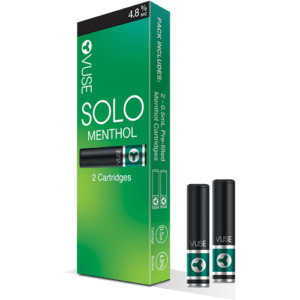
The U.S. Food and Drug Administration issued marketing denial orders (MDOs) for two menthol e-cigarette products currently marketed by R.J. Reynolds Vapor Company under the Vuse Solo brand.
Reynolds is expected to challenge the order.
The currently marketed products include the Vuse Replacement Cartridge Menthol 4.8% G1 and the Vuse Replacement Cartridge Menthol 4.8% G2, according to a statement. The company may resubmit applications or submit new applications to address the deficiencies for the products that are subject to these MDOs.
The FDA evaluates premarket tobacco product applications (PMTAs) based on a public health standard that considers the risks and benefits of the product on the population as a whole.
After reviewing the company’s PMTAs, the FDA determined that the applications lacked sufficient evidence to demonstrate that permitting the marketing of the products would be appropriate for the protection of the public health, which is the applicable standard legally required by the 2009 Family Smoking Prevention and Tobacco Control Act.
Specifically, the evidence submitted by the applicant did not demonstrate that its menthol-flavored e-cigarettes provide an added benefit for adult smokers relative to tobacco-flavored e-cigarettes.
In October last year, the FDA issued MDOs for several menthol-flavored vaping products marketed by Logic Technology Development. It was the first time the FDA issued MDOs for menthol products after receiving a scientific review.
A few days after the order was issued, Logic obtained a court order from the U.S. Circuit Court of Appeals for the 3rd Circuit that temporarily stayed the order.
The U.S. Food and Drug Administration is proposing new requirements for tobacco product manufacturers regarding the manufacture, design, packing and storage of all tobacco products.
The proposed requirements would help protect public health by, among other things, minimizing or preventing contamination and limiting additional risks by ensuring product consistency, according to an FDA statement.
“While no tobacco product is safe, this proposed rule is intended to minimize or prevent additional risks associated with these products,”
Brian King / Credit: FDA
said Brian King, director of the FDA’s Center for Tobacco Products. “Once finalized, it would establish requirements for tobacco product manufacturers that will help protect public health.”
The proposed new requirements would help manufacturers comply with the Federal Food, Drug, and Cosmetic Act by helping minimize or prevent the manufacture and distribution of tobacco products contaminated with foreign substances—such as metal, glass, and plastics—which have been found in tobacco products. T
The proposed rule would also help address issues related to inconsistencies between e-liquid product labeling and the actual concentrations in e-liquids, “Such variability can be misleading to consumers, potentially intensifying addiction and exposure to toxins,” the agency states.
The proposed rule would also establish several requirements related to the identification, tracing and corrective actions for tobacco products that don’t meet specifications or are contaminated, including for tobacco products that have already been distributed.
In the event of an issue, these requirements would require manufacturers to take corrective actions, which may include conducting a recall.
The proposed requirements apply to manufacturers of finished and bulk vaping and other tobacco products. As laid out in the proposed rule, a finished tobacco product is a tobacco product, including any component or part, sealed in final packaging; for example, an e-cigarette, a pack of cigarettes or a can of moist snuff.
A bulk tobacco product is a tobacco product that isn’t sealed in final packaging, but is otherwise suitable for consumer use.
The proposed rule establishes a framework for manufacturers to adhere to, including:
establishing tobacco product design and development controls;
ensuring that finished and bulk tobacco products are manufactured according to established specifications;
minimizing the manufacture and distribution of tobacco products that don’t meet specifications;
requiring manufacturers to take appropriate measures to prevent contamination of tobacco products;
requiring investigation and identification of products that don’t meet specifications to institute appropriate corrective actions, such as a recall; and
establishing the ability to trace all components or parts, ingredients, additives and materials, as well as each batch of finished or bulk tobacco product, to aid in investigations of those that don’t meet specifications.
The FDA will hold a public oral hearing on April 12 to gather additional comments from stakeholders, including industry, the scientific community, advocacy groups, and the public.
The proposed rule also will be available for public comment for 180 days. The agency will review all comments as part of the rulemaking process for this foundational rule.
“We remain committed to transparency and stakeholder engagement, including providing clarity to industry so that they are equipped to comply with the law,” said King. “We encourage all interested individuals and organizations to participate in the rulemaking process. When the public submits a comment based on sound grounds, that can make an important difference in the agency’s decision-making.”
The FDA will also hold a meeting of the Tobacco Products Scientific Advisory Committee (TPSAC) on May 18 to seek recommendations from the agency’s outside panel of experts on the requirements laid out in the proposed rule. As part of the TPSAC meeting, the public will have an opportunity to make oral presentations. The FDA intends to make TPSAC meeting materials available on its website no later than 48 hours before the meeting.
The U.S. Food and Drug Administration is planning to make recommendations on how to regulate the use of the popular cannabis compound cannabidiol (CBD) in food and supplements, the Wall Street Journal reported, citing agency officials.
After weighing the evidence on the compound’s safety, the FDA will decide within months how to regulate legal cannabis and whether that will require new agency rules or new legislation from Congress, according to the report.
In an interview, Janet Woodcock, the FDA’s deputy commissioner and leader of the agency’s cannabis regulation efforts, expressed concern about the safety of CBD and whether current regulatory pathways for food and dietary supplements are suitable for this substance.
However, the agency is interested in determining whether it is safe to consume CBD on a daily basis for extended periods of time or during pregnancy.
Woodcock mentioned concerns about potential effects on fertility in the future, but, at the same time, her comment signaled that the agency is working to establish regulatory frameworks for the legal sale of appropriate cannabis and cannabis-derived products.
CBD is a chemical compound found in cannabis plants. It is one of the main ingredients in cannabis, but unlike THC, it does not cause a high or have psychoactive effects.
The 2018 Farm Bill legalized hemp cultivation in the U.S., which led to significant growth in the market for CBD products. These products, sold as dietary supplements, are believed to have health benefits. As a result, many businesses in the cannabis industry are now selling CBD products across the country.
Over the last few years, the FDA posted several warning letters to companies for illegally selling products containing CBD. The companies are accused of selling products containing CBD that the FDA states some people may confuse for traditional foods or beverages that do not contain CBD or were making medical claims about their CBD products.
In 2021, The FDA told Charlotte’s Web Holdings, one of the world’s largest CBD companies, that its cannabidiol product cannot be sold as a dietary supplement, signaling that CBD reform may have to wait for congressional action.
Interested parties can now register for the Jan. 12 U.S. Food and Drug Administration seminar covering the ban of menthol flavors in tobacco products. “The Scientific Basis of Proposed Tobacco Product Standards to Prohibit Menthol as a Characterizing Flavor in Cigarettes and Flavors in Cigars” is the first FDA tobacco-related seminar of the year.
The presentation will provide an overview of the scientific evidence that informed the development of these proposed rules, with an explanation of the external peer review process the FDA utilized for review of the highly influential scientific assessments for these proposed rules.
Bridget Ambrose, director of the Division of Population Health Science in the Office of Science at the FDA’s Center for Tobacco Products, will be the speaker. Ambrose has over 20 years of experience in tobacco control and regulatory science, with specialized experience in longitudinal analyses of tobacco use.
With Republicans in control of the U.S. House, some experts expect the vape industry to thrive.
By Timothy S. Donahue
The next two years should be better than the past two years. That was the overall outlook from vapor industry experts speaking during the Vapor Technology Association’s (VTA) 2022 Post-Election Round-Up webinar in late November. Tony Abboud, executive director of the VTA, told attendees that his organization has been working diligently with two Washington, D.C.-based firms, West Front Strategies, a lobbying group, and FORA Partners, a public affairs agency, to promote the interests of the vaping industry as Republicans take over the U.S. House of Representatives in 2023. “We have a very specific agenda, some of which we’ve discussed (as an overview of what) we are pursuing,” he said. “We’ve done an enormous amount of groundwork.”
Shimmy Stein
Shimmy Stein, a partner with West Front Strategies, said the change in leadership at the House could have a positive impact on the vaping industry until at least the next election cycle. “Anytime you can take over the gavels, take over the control of the messaging, take over control of the chairmanships and the legislation, that is an important piece of governing,” he explained. “And so, while it was not to the extent or to the size which Republicans were hoping for in terms of the majority in the House of Representatives, it’s still pretty significant and will change the manner in which Washington will function.”
Over the next two years, the vaping industry should feel “a little more comfortable, a little more secure” going into a divided Congress (the U.S. Senate leadership did not change), according to Craig Kalkut, a partner with West Front Strategies. However, the vaping industry has always faced threats from both Democrats and Republicans due to their concerns over teen vaping. “We still need to work with both parties. We still could face issues and threats of overregulation and poorly conceived legislation. But the bottom line is that we will have a more comfortable environment with Republicans controlling one house of Congress,” said Kalkut.
Craig Kalkut
Reconciliation, a way for Congress to enact legislation on taxes, spending and the debt limit with only a majority vote, is no longer a threat to the vapor industry, according to Kalkut. He said that’s just not something that can happen in a divided Congress. “What that means, ultimately, is that anything that passes will need to have bipartisan support,” said Kalkut. “And because of that, [legislation] will likely be more limited, more moderate, and hopefully, if there’s any legislation passed in our area, that will be something that allows us to thrive, which addresses the concerns that linger over teen vaping but does not overregulate and drive people away from vaping.”
Kalkut also confirmed that gridlock is a concern in a divided Congress; however, gridlock could also provide incentives for both parties to compromise. “They’re both seen as in charge, so they both sometimes want to get something done. And that will bring people to the table and often over issues that are not central to either party’s ideology,” he said. “It’s hard to come to a compromise on taxes, or it’s hard to come to a compromise on healthcare … but something like vaping, perhaps there will be opportunity for common sense provisions to prevail in an area where Democrats and Republicans can come together.”
Max Hamel
Max Hamel, founding partner of FORA, said when Congress is split, the White House typically relies heavily on its executive privilege. There is no known administration agenda on vaping, so a vaping-related rule is unlikely. With Republicans in control of the House, they also head committees. The House oversight committee and its subcommittees could present opportunity for the vaping industry, according to Hamel.
“We do have new personalities on both the majority and the minority side, so they’ll probably have some growing pains,” he said. “The big question is, how does this new authority, especially in the House, get wielded[?] … whether it’s one seat or 40 seats, the authority with the majority is the same, and it is substantial from [an] investigation and oversight standpoint; [that’s] probably not necessarily true from a legislative standpoint … the oversight subcommittee, we do have the opportunity to surface some things, but it’s really an opportunity for us now to not be on defense and [to] put forth an agenda and some messaging that really focuses on the things that are advantageous to us.”
Additionally, with Juul losing its stranglehold on the vaping market, Hamel said the vaping landscape is changing. Juul became the focus to save youth from vaping, and today, Juul isn’t the focus. The market is made up of a more diverse group of companies with different technologies dedicated to harm reduction. Hamel said this is the message that should be projected. “I think our priority will be focusing on the messages that really emphasize the harm reduction aspects,” he said.
Kalkut then added that the vaping industry has an opportunity now to change the conversation, particularly with Democrats but also Republican critics and skeptics of vaping through the ever-expanding body of science that shows the relative safety and incredible potential for harm reduction that next-generation tobacco products have. “That has become more and more clear as time has gone on over the last couple of years,” he said. “I think once we show that, once we demonstrate our commitment as an association in the industry to addressing teen vaping, we have a real chance of changing the narrative.”
Ashley Davis
Ashley Davis, a founding partner at West Front Strategies, told attendees that, looking back on industry challenges, there has been success. However, her concerns going into the last Congress (2020–2022) were that she didn’t really know in what direction or how forcefully Biden would lean on the vapor industry. She says the industry “dodged a bullet.” The industry could have suffered more than it did those first two years in a Biden administration. She also said the issue of youth use will remain at the forefront of any discussion concerning electronic nicotine-delivery system products.
“We do have to still deal with the youth issue. And I think we all realize that any negative press that comes up is around the youth issue … Everyone loves a microphone. It’s a member of Congress. If there’s an issue to discuss, that’s what they’re going to discuss,” explained Davis. “[We are] trying to make sure that any bad legislation is not passed—it’s much more unlikely in this Congress than it was before.”
Taking a question from the audience, Abboud closed the session speculating on the impact of the Reagan-Udall Foundation’s external review of the U.S. Food and Drug Administration’s Center for Tobacco Products, the results of which are expected in mid-December.
Abboud said that numerous comments from staffers of the FDA for the Reagan-Udall assessment suggest the regulatory agency is in a state of disarray and is being influenced by outside forces not scientific research. He said he hopes the foundation will advise the FDA that premarket tobacco product application (PMTA) decisions should be free from any external pressures, especially political pressure.
“[The review should recommend to the FDA that PMTA] decisions must be made based upon the science that is submitted as well as making sure that the agency does, in fact, review all of the science that has been submitted as part of any applications as well as [reviewing] all of the applications that have [been] submitted,” said Abboud. “Because that was another big failing of the current process where applications have been rejected [without a full review].”
A lawmaker in Scotland wants to ban the public display of e-cigarettes in retail shops. Scottish Greens MSP Gillian Mackay wants retailers to treat them in the same way as cigarettes and hide them from view.
“This is beyond the days of smoking behind the bike sheds—this is a multi-million industry leading the nation’s health down a path to disaster,” Mackay said. “It is a ticking time bomb, and, until we know more, that’s not a risk I or anyone else should be asked to accept.”
She has written to shops and vape manufacturers ahead of taking her campaign to the Scottish Parliament, according to the Daily Record.
Mackay, the Green Party’s health spokesman, said there is growing concern that the number of underage people being attracted by “deliberately sweet-toothed tactics” to market products is spiraling.
She is calling on retailers to lead by example by writing to them urging that they hide the products from view.
The Reagan-Udall Foundation today submitted its recommendations to Robert Califf , commissioner of the U.S. Food and Drug Administration. The findings are what many in the industry are calling “meaningless” and “less than compelling.”
The report concludes that vaping industry stakeholders observed a lack of “consistent implementation” of what the industry understood to be the policies of the Center for Tobacco Products (CTP), particularly with respect to tobacco harm reduction and the requirements needed to navigate the premarket tobacco product application (PMTA) process.
The “Operational Evaluation of FDA’s Tobacco Program” was facilitated at Califf’s request. The announcement came as Califf attempted to push past several controversies that dominated his second stint running the agency, including his issuing of a marketing denial order (MDO) to e-cigarette maker Juul Labs and later having to rescind that order.
The report did highlight several wide-ranging problems that the report states hinder its ability to regulate the industry and reduce tobacco-related disease and death. The report stated that the CTP should make “process improvements and identify and address the policy and scientific questions” that underpin its regulatory framework. The review concluded that CTP’s implementation of its program also has been affected by “changes in leadership and administrations.” In its first 13 years, CTP has operated under seven different commissioners in three different administrations, and recently hired a third CTP director, Brian King.
“From the stakeholders’ perspective, policy shifts with broad impact on the industry occurred without notice. The Center has faced significant challenges in clearing its policies through the career and political infrastructure. It took years to establish requirements and standards governing application reviews, frustrating industry and creating problems for the Center itself when it received deficient applications,” the report states. “Issues in application reviews resulted in litigation necessitating re-review of some applications. The current environment reflects an unintended shift from what was structured by law as a pre-market authorization framework to the reality of a post-market regulatory environment, which is much more difficult to deal with given that there are few incentives for industry to come into compliance and many incentives for industry to delay the process.”
The evaluation and resulting recommendations focused on four program areas: regulations and guidance, application review, compliance and enforcement, and communication with the public and other stakeholders, according to the review. The review and recommendations are meant to assist the agency in making changes to better carry out its regulatory responsibilities; to strengthen its relationships with stakeholders
The report identified several fundamental issues that the center needs to address and it states that the report offers “cross-cutting as well as program-specific recommendations to help CTP operate more effectively,” according to the authors of the review.
The key points from the report can be summarized as follows:
The panel observes that CTP has been forced to operate primarily in a reactive mode, moving from one challenge to the next, mainly provoked by the outside forces. The Center should transition to becoming a more proactive and strategic program. With more substantial engagement with stakeholders and the public, CTP should take the time now to think strategically about where it is today and where it needs to go in the next several years.
Although CTP has a critical mission to protect the public health from tobacco-related disease and death and is regulating products that have no inherent benefit and huge societal costs, it is a government regulatory program with a duty to run efficiently, fairly, and transparently. This responsibility to function as an effective product regulator should be captured in the Center’s mission, vision, and goals and carried out to the best of the Center’s ability.
The panel recognizes that to improve the effectiveness of its application review, the Center should make process improvements and identify and address the policy and scientific questions that underpin its regulatory framework.
CTP needs to work with other entities on strategies to clear the market of illegal tobacco products more rapidly and provide more transparency to the public on its efforts to do so. This work is challenging but essential as CTP adopts a more strategic approach. While there is much the Center can do on its own, the panel notes that enforcement of the premarket requirements in the tobacco laws, particularly to help prevent youth use of tobacco products, requires the involvement and support of agencies other than FDA. The authors encourage the agency to elevate this issue and pursue a more comprehensive approach that leverages the resources of other agencies with a declared role in tobacco control.
“Overall, the panel is confident that many of the concerns raised in this report can be addressed by CTP’s talented and dedicated staff, with the support of FDA leadership,” the report states.
Numerous comments from purported staffers of the FDA for the Reagan Udall assessment claimed the regulatory agency is in a state of disarray and being influenced by outside forces, not scientific research. One comment stated that reviewers of premarket tobacco product applications (PMTAs) in the CTP Office of Science (OS) lack the autonomy to exercise “best scientific practices” in their reviews of PMTAs. The report fails to address these issues.
The panel was comprised of former federal public health leaders, regulatory strategists, and process improvement specialists. Lauren Silvis, served as chair of the group, which included Jane Axelrad, Keith Flanagan, Charlene Frizzera, and Alberto Gutierrez.
“The panel provided recommendations to help the Agency’s tobacco program strengthen its operations as it works to reduce the harm associated with tobacco use,” said Lauren Silvis. “The Center for Tobacco Products has made significant progress in establishing a regulatory program for tobacco products and our recommendations are intended to help the Center develop additional tools for achieving its public health objectives.”
Through multiple listening sessions, interviews, and an online portal, the group received and carefully reviewed input from a range of stakeholders, including FDA staff and the public, according to the report. The author’s claim the report offers “cross-cutting and program-specific recommendations” for the FDA to consider, “focusing on regulations and guidance, application review, compliance and enforcement, and communication with the public and other stakeholders.”
The report did not address tobacco policy issues, which are outside the scope of the evaluation, according to a Reagan-Udall Foundation.
One industry stakeholder, who asked not to be named for fear of retribution from the FDA for its brands under PMTA review by the agency, said the report’s findings were “a joke” and “completely ignorant of the real problems at the CTP.”
Califf said Monday he will review the recommendations with the aim of outlining the agency’s next steps by February.
Earlier this month, Reagan-Udall delivered its food report that was commissioned at the same time as the tobacco report. The food response suggests the agency’s leadership be restructured to improve its response to emergencies, including the recent shortage of baby formula
Reagan-Udall was created by Congress to help further FDA’s mission. The non-profit receives funding from both the FDA and the industries it regulates, including drugmakers.







 The U.S. Food and Drug Administration issued