Category: Uncategorized

  • Derek Yach

    Derek Yach

    A global health expert and anti-smoking advocate for more than 30 years, Derek Yach is the owner of Global Health Strategies. Previously, Yach was the director of the Foundation for a Smoke-Free World and a World Health Organization cabinet director and executive director for noncommunicable diseases and mental health. He was deeply involved with the development of the Framework Convention on Tobacco Control. On this page we feature a selection of Yach’s contributions to Tobacco Reporter.

    Arizona Advances Landmark Vape Bill

    The Arizona Senate passed House Bill 4001 on May 26 with an overwhelming bipartisan vote of 24-2, establishing the state’s first formal regulatory framework for

  • Cheryl Olson

    Cheryl Olson

    Cheryl K. Olson is a California-based public health researcher who specializes in behavioral health issues and consults on tobacco product behaviors via McKinney Regulatory Science Advisors. She spent 15 years on the faculty of Harvard Medical School. In this section we feature a selection of Olson’s contributions to Tobacco Reporter

    Arizona Advances Landmark Vape Bill

    The Arizona Senate passed House Bill 4001 on May 26 with an overwhelming bipartisan vote of 24-2, establishing the state’s first formal regulatory framework for

    France Sets Steep Fines in Pouch Ban

    Restrictions cover the use, possession, and sale of nicotine pouches, with violations carrying penalties of up to five years in prison and fines reaching €400,000.

    IQOS Ranks No. 74 in Global Brands

    The company said that IQOS surpassed $10 billion in annual net revenues within a decade of launch, contributing significantly to PMI’s broader smoke-free business.

  • Clive Bates

    Clive Bates

    Clive Bates is the director of Counterfactual Consulting and the former director of Action on Smoking and Health (U.K.). On this page we feature a selection of his contributions to Tobacco Reporter.

    Arizona Advances Landmark Vape Bill

    The Arizona Senate passed House Bill 4001 on May 26 with an overwhelming bipartisan vote of 24-2, establishing the state’s first formal regulatory framework for

    France Sets Steep Fines in Pouch Ban

    Restrictions cover the use, possession, and sale of nicotine pouches, with violations carrying penalties of up to five years in prison and fines reaching €400,000.

    IQOS Ranks No. 74 in Global Brands

    The company said that IQOS surpassed $10 billion in annual net revenues within a decade of launch, contributing significantly to PMI’s broader smoke-free business.

  • Minister Expresses Support for Tobacco at ITGA Meeting

    Minister Expresses Support for Tobacco at ITGA Meeting

    Photo: Taco Tuinstra

    Zimbabwe’s minister of agriculture, Anxious Masuka, opened the International Tobacco Growers Association’s (ITGA) 2023 Africa regional meeting June-28-29 expressing strong support for the tobacco sector

    Growers’ representatives from four of the leading tobacco producing markets in Africa—Malawi, Tanzania, Zambia, and Zimbabwe—gathered in Harare to debate the challenges and opportunities facing their sector. Participants requested the support of their governments in the face of multiple threats affecting tobacco production, which brings considerable socioeconomic benefits to the region. Among other topics, they discussed growers’ sustainability efforts and the situation of in their respective markets.

    Highlighting the central role of tobacco growing in Zimbabwe’s economy, Masuka provided details about the country’s Tobacco Value Chain Transformation Plan, which is supposed to increase value addition of the crop and improve local earnings (also see “The Man Behind the Plan,” Tobacco Reporter, May 2023). Masuka aims at record volumes, record earnings and record average prices for tobacco growers. He stated that the actions of the World Health Organization Framework Convention on Tobacco Control (FCTC) are “ill-informed and ill-timed.” “Tobacco in Zimbabwe is an important crop and we are not making any apologies about it,” said Masuka.

    Ryan Swales, the president of Zimbabwe Tobacco Association (ZTA), highlighted the important opportunity presented by the meeting in debating the regional and national issues, given the specific challenges attached to the market, predominantly in sustainability.

    Governments need to look at farmers as their main strategic partners and support their efforts.

    ITGA’s President Jose J. Aranda called on governments to support growers in their sustainable tobacco production efforts as the livelihoods of millions of people around the world depend on it. Tobacco growing, he said, brings valuable contributions to local economies in the form of labor, income, and further opportunities for growth. Aranda also emphasized that tobacco growers operate within a legal framework. “Governments need to look at farmers as their main strategic partners and support their efforts.”

    During the Open Session, participants were able to follow presentations about the current developments in the global leaf market, with focus on African production and pricing, the outlook of the regulatory environment and possible implications for growers, along with a detailed analysis of the ITGA 2023 Market Survey, which highlights the economic, social and environmental challenges for growers in all leading tobacco growing areas. Finally, there were two comprehensive debate sessions with key stakeholders in the four represented markets discussing sustainable tobacco productions and the efforts made to overcome the pressing challenges of the region—cost of production, deforestation, climate change, poverty and lack of opportunities for the youth.

    The ITGA also highlighted its World Understanding Tobacco Farming Day campaign. Aranda urged the sector to work together against the demonization of tobacco growing. ITGA is raising awareness about the realities of tobacco farming to stop the unfounded claims by the WHO FCTC in their World No Tobacco Day.

  • Topower Brings More Puffs and Better Battery

    Topower Brings More Puffs and Better Battery

    A new disposable vape battery solution was showcased during the World Vape Show Dubai, held from June 21-23.
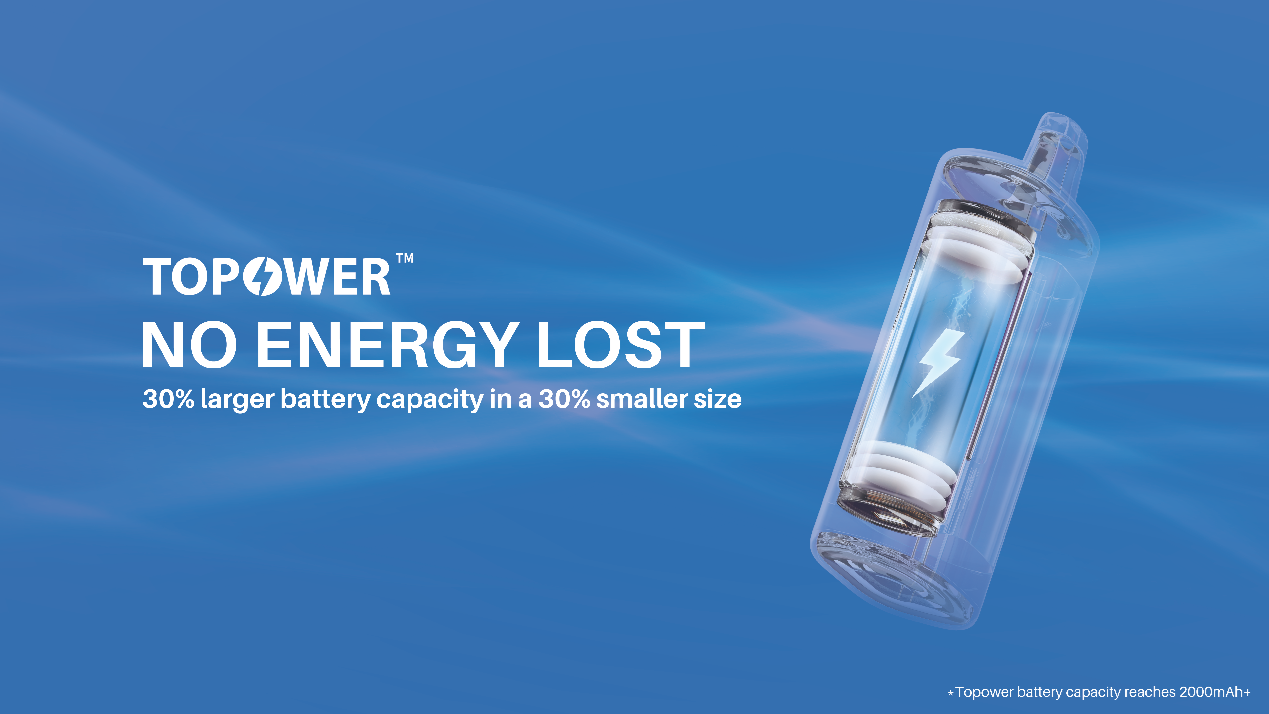
    The pioneering power technology developed by FEELM, a subsidiary of the world’s largest atomization technology company Smoore, is intended for markets that allow higher puff counts and has been designed to increase the endurance of single-use devices.

    When compared to mainstream batteries, the new Topower offers 30 percent more capacity with the battery size remaining unchanged and can deliver over 6,000 puffs without needing to be recharged.

    Topower also provides a constant power output that reduces the loss of taste caused by voltage drop.

    FEELM says the new innovation also boasts the “longest shelf life in the industry,” according to a press release, promising just 1 percent power attenuation over six months and 3 percent over a year – which the brand says is 1/10th the level seen in traditional batteries.
    “This is our new battery technology customized for higher puff disposable vape, with large puff vaping without charging, ultimate-low discharge, ultimate-high energy density,” said Rex Zhang assistant president of FEELM. “The end goal for our industry is to create a smoke-free future and unburden adults from the harms of deadly cigarettes – technology is going to play a leading role in achieving this.”

    Zhang said the no-charge element of Topower was beneficial not just for brands, but for consumers as well. He said the battery solution eradicates the need for additional charging cables, which eliminates the necessity for internal charging devices and consequently saves on production costs.

    He also said consumers would no longer need to “worry about when and where they could next plug their disposable, which can reduce user anxieties and create a more convenient vaping experience,” according to the release.

    Topower has been incorporated into two solutions – FEELM Max’s ceramic coil disposable solution and Power Alpha‘s mesh coil solution.

    FEELM Max and Power Alpha have already been extensively commercialized and have achieved considerable success in multiple countries.

  • Sampoerna Sales Up 12.5 Percent

    Sampoerna Sales Up 12.5 Percent

    Photo: Taco Tuinstra

    Sampoerna reported net sales of IDR111.2 trillion ($7.38 billion) in 2022, up 12.5 percent from the previous year. Sales volume at the Indonesian cigarette manufacturer increased 4.8 percent to 86.8 billion units, bolstered by the performance of premium brands such as Sampoerna A, Dji Sam Soe and Marlboro.

    “The combination of Covid-19 with the impact of the double-digit excise tax increases and widening excise tax gaps has resulted in major challenges for the tobacco industry but Sampoerna remained focused on creating values for its stakeholders, Sampoerna President Director Vassilis Gkatzelis told shareholders at the company’s annual general meeting.

    “We evolved our strategy in a forward-looking way and delivered a robust topline performance in 2022 with year-on-year volume growth and stabilization of market share despite the headwinds and accelerated downtrading to the lower-taxed Below Volume Tier 1 segment.

    “We also reached a critical strategic milestone with our smoke-free products manufacturing facility in Karawang with an investment valued at more than $186 million, which started operations in the fourth quarter of 2022 to fulfill demands both for the domestic market and Asia Pacific.”

    Gkatzelis attributed Sampoerna’s 2022 performance to solid business fundamentals, robust route to market and resilient organization. Although the company’s profitability decreased on a yearly basis and is still significantly lower versus the pre-pandemic levels, key profitability metrics improved during the second half of 2022, both sequentially versus the first half and the year before, driven by returning to net positive pricing as of the third quarter of 2022.

    The positive momentum continued in the first quarter of 2023 with IDR27 trillion in net revenues and IDR2.2 trillion in net profit, up by 3.1 percent and by 12.8 percent, respectively, compared to the same period last year. In this first quarter of 2023, Sampoerna grew its market share to 28.5 percent, up 0.2 percentage points compared to the comparable 2022 quarter.

    Vassilis praised the Indonesian government for providing business certainty through the issuance of a multi-year tobacco products excise policy for 2023-2024. “We certainly wish the government issues future policies that can support the sustainability of the tobacco industry and enable economic recovery to pre-pandemic levels,” he said in a statement.

    According to Vassilis, a predictable environment is key when it comes to delivering sustainable value creation for the broader ecosystem, especially for long-standing investors in Indonesia.

    “I am proud to share that early this year Sampoerna completed its investment in building a production facility for the innovative smoke-free tobacco products in Karawang, West Java,” he said.

    “Additionally, we recently launched the latest technology and innovation of smoke-free tobacco products, namely IQOS ILUMA, through the continuation of IQOS Club with a limited launch in 10 major cities in Indonesia. These are key milestones to mark Sampoerna’s 110 years of presence in the country.”

    Indonesia’s facility for heated tobacco sticks is PMI’s first in Southeast Asia and the seventh globally. “Sampoerna’s investment is a vote of confidence in the investment climate of Indonesia,” said Vassilis. “The new factory in Karawang entails further value creation by increasing research capacity, absorbing high-skilled workers, purchasing local tobacco supplies, operating digital service centers, improving export performance and empowering MSMEs [micro, small and medium-sized enterprises] which includes digitalization support and increasing the capacity of traditional retailers,” said Vassilis.

  • North Carolina Revenue Department Disputes Philip Morris in Tax Litigation

    North Carolina Revenue Department Disputes Philip Morris in Tax Litigation

    Image: andreykr | Adobe Stock

    Philip Morris is engaged in a legal battle with the North Carolina Department of Revenue over an $8.7 million tax bill, reports The Carolina Journal. Philip Morris argues that it should be able to claim $7.2 million in tax credits, but the department disagrees.

    The dispute centers on the interpretation of a phrase in the state law, with Philip Morris claiming that the law does not limit the amount of credit that can be generated in a given year. The revenue department argues that Philip Morris exceeded the $6 million cap on credits and improperly carried them forward to subsequent tax returns.

    “Philip Morris argues the decision in the case will be determined by the meaning of the phrase ‘credit allowed’ found in N.C. Gen. Stat. § 105-130.45. However, this case is about the meaning of six words added to N.C. Gen. Stat. § 105-130.45(b) during a special session convened by the General Assembly,” according to a brief filed by N.C. Department of Justice lawyers. They represent the Department of Revenue in the tax dispute.

    “The words ‘may not exceed 6 million dollars’ specifically limited the amount of credits a taxpayer could generate on the exportation of cigarettes,” state lawyers wrote. “The amendment did not disturb the separate and preexisting cap on the amount of credits that a taxpayer could use on its tax return during a single year in subsection (c). Despite a plain reading of the amended language, Philip Morris contends that subsection (b) does not limit the amount of credit that can be generated in any given year and only limits the amount that can be claimed in a tax year. Thus, Philip Morris continued to incorrectly generate credits in excess of the $6 million cap.”

    “For tax years 2005, 2006 and 2007, Philip Morris calculated its export credits generated in the amount of $28,767,799; $27,374,957; and $14,310,414, respectively, far exceeding the $6,000,000 limit,” according to the brief. “Philip Morris then improperly attempted to carry forward the unauthorized credits to its 2013 and 2014 corporate tax returns.”

    “Through this appeal, Philip Morris now continues to lobby for better treatment than its competitor R.J. Reynolds by attempting to question the statutory construction of an unambiguous statute,” the revenue department’s lawyers argued.

    Philip Morris argues that the department’s interpretation of the law is a recent development and not supported by legislative history.

    The state Supreme Court is yet to issue a ruling in the case.

  • Special Report: Italy’s Tobacco Innovation Hub

    Special Report: Italy’s Tobacco Innovation Hub

    Photo: Stefanie Rossel

    Sale et tabacchi, the inscription on the logo of Italian tobacconist shops, still speaks of tobacco’s long history on the peninsula. It calls to mind the country’s monopoly on salt and tobacco in colonial times.

    Today, Italy is the European Union’s largest producer of leaf tobacco, with an annual production of 50 million kg, representing a market share of 27 percent. The country’s economic powerhouse in the north is home not only to leaf tobacco cultivation but also to leading cigarette companies’ and suppliers’ manufacturing sites, which continue to invest in the region.

    Philip Morris International has a state-of-the-art tobacco heating factory in Bologna, BAT recently inaugurated an innovation hub in Trieste, Tobacco Technology has a set up a flavorings lab in the region and Montrade is expanding its operations, to name just a few developments.

    In the runup to TabExpo Bologna 2023, Tobacco Reporter’s Stefanie Rossel traveled through northern Italy to learn about the tobacco industry’s latest investments. In this special report, she shares her insights.

    Arizona Advances Landmark Vape Bill

    The Arizona Senate passed House Bill 4001 on May 26 with an overwhelming bipartisan vote of 24-2, establishing the state’s first formal regulatory framework for

  • Special Report: Zimbabwe’s Tobacco Transformation Plan

    Special Report: Zimbabwe’s Tobacco Transformation Plan

    Photo: Taco Tuinstra

    Convinced that its earnings fall short of potential, Zimbabwe has set out to capture more value from its tobacco business.

    By growing the crop and moving up the value chain, the country aims to build a $5 billion tobacco industry by 2025.

    Will it succeed? Read our special report about the challenges and opportunities associated with Zimbabwe’s Tobacco Value Chain Transformation Plan.

    Arizona Advances Landmark Vape Bill

    The Arizona Senate passed House Bill 4001 on May 26 with an overwhelming bipartisan vote of 24-2, establishing the state’s first formal regulatory framework for

  • Special Report: Diversifying Malawi’s Economy

    Special Report: Diversifying Malawi’s Economy

    Photo: Taco Tuinstra

    Depending on the season and on who you ask, tobacco accounts for between 40 and 70 percent of Malawi’s export earnings.

    In a good season, the golden leaf generates a relative level of wealth in the countryside and earns the nation much-needed foreign currency to import the products and services it cannot produce at home.

    In a bad season, there will be poverty in the villages.

    Read our special report to learn how Malawi is diversifying to make its economy more resilient and prepare for a future with less tobacco.

    Arizona Advances Landmark Vape Bill

    The Arizona Senate passed House Bill 4001 on May 26 with an overwhelming bipartisan vote of 24-2, establishing the state’s first formal regulatory framework for